
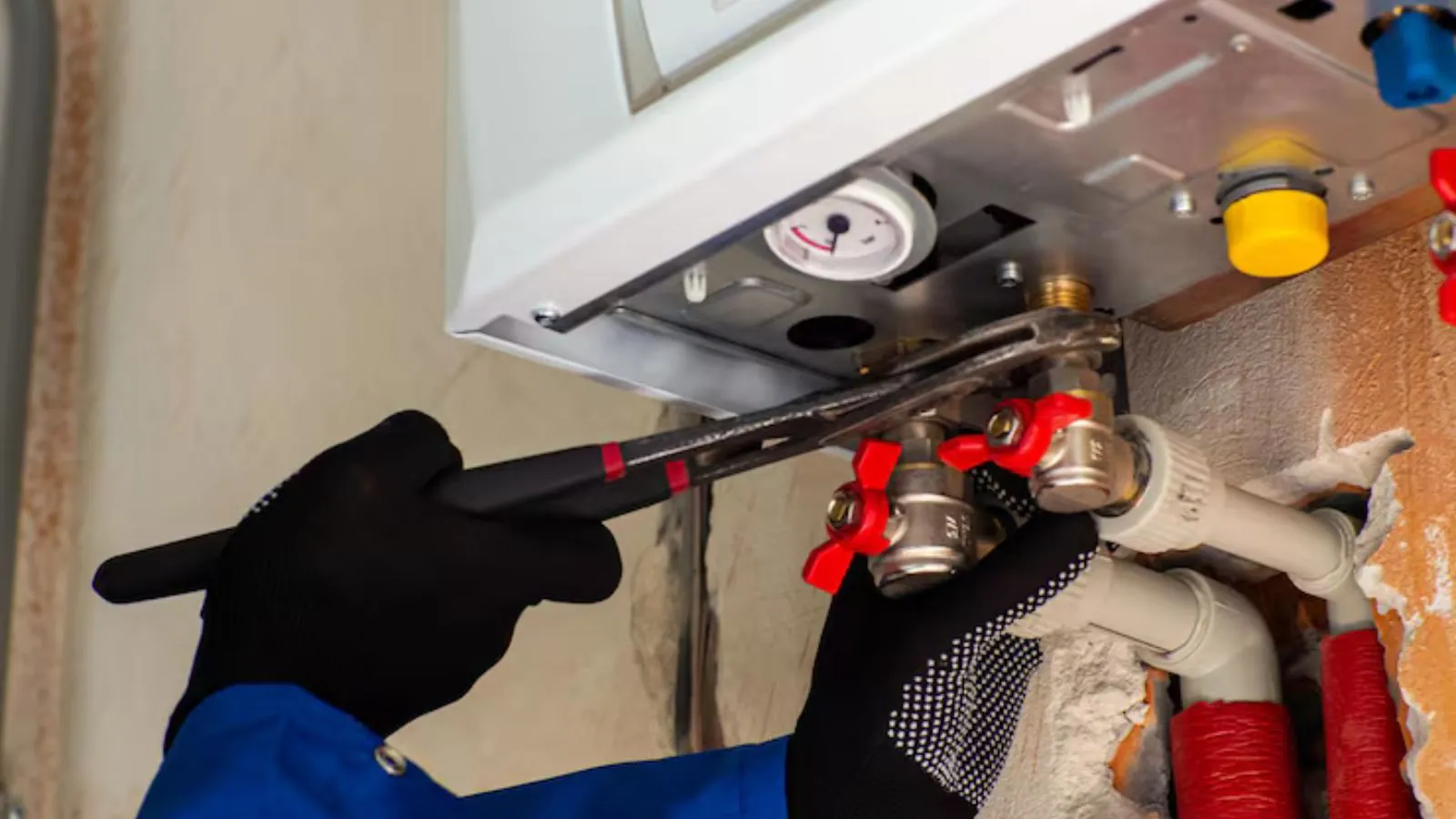
Water Heater Leaks in Highland Park Basements and Closets
Most tank water heaters sit in a basement, utility closet or garage. When a tank fails, the water often runs across a concrete floor toward a drain, then into storage boxes, finished walls and floor coverings. A standard tank holds dozens of gallons, so even a single failure can soak a large area.
Many Highland Park homes have finished basements where the water heater sits next to a laundry room or a recreation area. That is where a small leak turns expensive. Carpet, pad, baseboards and the bottom of drywall wick water quickly.
Our crews begin with water extraction, then move to drying and a written scope. If the heater is still leaking, shut off the cold water supply valve on top of the unit first.
Signs a Water Heater Is Failing
Heaters give warnings before they flood a floor. Catching them early can limit the damage.
Moisture at the base
A damp or rusty ring around the base can mean the tank is seeping. Do not ignore it.
Rust-colored water
Discolored hot water can signal corrosion inside the tank.
Popping or rumbling sounds
Sediment build-up on the tank bottom can cause noise and stress the steel.
Dripping relief valve
A steady drip from the pressure relief line points to pressure or temperature trouble that needs a plumber.
Heater flooding the floor?
Close the cold water valve and call. The 24/7 line is open.
Our Water Heater Leak Cleanup Process
Safety first
Turn off power or gas to the heater and close the cold water valve. If you are unsure, call and we will help.
Extract the water
Pumps and wand extractors remove standing water from the floor and low areas.
Check hidden damage
Moisture meters and thermal imaging show where water reached walls, flooring and stored items.
Dry and document
Air movers and dehumidifiers run until readings reach dry targets, and we keep a written log.
Emergency Cleanup Prevents a Basement Loss From Spreading
A water heater leak usually involves clean supply water at first. That is the best time to act, because clean water is easier to dry than water that has sat for days. Once it has soaked into carpet pad and drywall, you may face partial removal.
Our line runs 24/7 because heaters do not fail on a schedule. Overnight calls are common. If you smell gas near the unit, leave the home and call the utility or emergency services before anything else.
Take photos of the unit, the label with the model number, and the wet areas. Your insurer may want to see them.
Repair or Replace the Heater: What Affects the Choice
| Question | Why it matters | Who helps |
|---|---|---|
| Is the tank itself leaking? | A failed tank usually cannot be repaired. | Licensed plumber. |
| Is it a fitting or valve? | Fittings can sometimes be replaced. | Licensed plumber. |
| How old is the unit? | Older units may not be worth repairing. | Plumber and homeowner. |
| How wet is the area? | Wet materials need drying either way. | Our crew. |
We handle the water cleanup. A licensed plumber handles the heater itself.
Insurance Notes for a Water Heater Failure
Sudden discharge from a plumbing appliance is often treated differently from long-term seepage.
Illinois Department of Insurance guidance says standard policies commonly exclude maintenance-related seepage. Ask your agent how your policy treats a failed appliance.
Keep the damaged heater until your adjuster has seen it if you can. We supply photos, readings and a drying log.
A Water Heater Failure in a Finished Basement
A frequent call involves a water heater in a basement utility room next to a finished recreation area. The tank splits or a fitting fails, and water spreads under a wall into carpet and a closet. Homeowners often find the loss when they smell damp or step on wet carpet.
We extract the water, check the wall base and the room next door, and lift wet pad. Baseboards come off so air can reach the wall bottom. If the tank is gone, the plumber disconnects and replaces it.
Because the water is usually clean supply water, many materials can be dried when we reach the loss soon enough. The longer it sits, the more carpet, pad and drywall come out.
Permits and Replacement Notes
Replacing a water heater commonly needs a permit. The Building Division handles permits in Highland Park, and neighbors such as Lake Forest also require them for water heater work. Ask your plumber to pull the permit and confirm it is closed out.
Consider adding a drain pan with a line to a floor drain, and a leak sensor on the floor beside the tank. Those cost little compared with a flooded basement.
If you are not sure how old your heater is, check the label for the serial number. Older tanks near the end of their life are more likely to fail. For the water cleanup afterward, our page on water extraction describes the first step.
Safety Steps Before Help Arrives
These steps keep people safe while a crew is on the way.
- Turn off the water at the main or the fixture valve if you can reach it safely.
- Do not touch outlets, switches or appliances that are wet or standing in water.
- Stay out from under a bulging ceiling or a sagging section of wall.
- Do not use ceiling fixtures or fans that have water in them.
- Photograph the damage before moving anything, and keep damaged items for your insurer.
Standards and Sources We Use
Our approach follows the general framework of ANSI/IICRC S500, the published standard for professional water damage restoration. The insurance notes on this page reflect guidance from the Illinois Department of Insurance.
Water Heater Leak Questions in Highland Park
Do you handle water heater emergencies at night or on weekends in Highland Park?
Yes. The line is open 24/7, including holidays, and a dispatcher will arrange a crew.
What should I do first when the heater floods?
Close the cold water valve at the heater, turn off its power or gas, and keep clear of wet outlets. Then call.
Is the water hot enough to hurt?
It can be. Avoid touching standing water near a leaking heater until the power is off.
Will drying equipment run all night?
Yes, for several days. Fans and dehumidifiers run continuously until readings show the area is dry.