
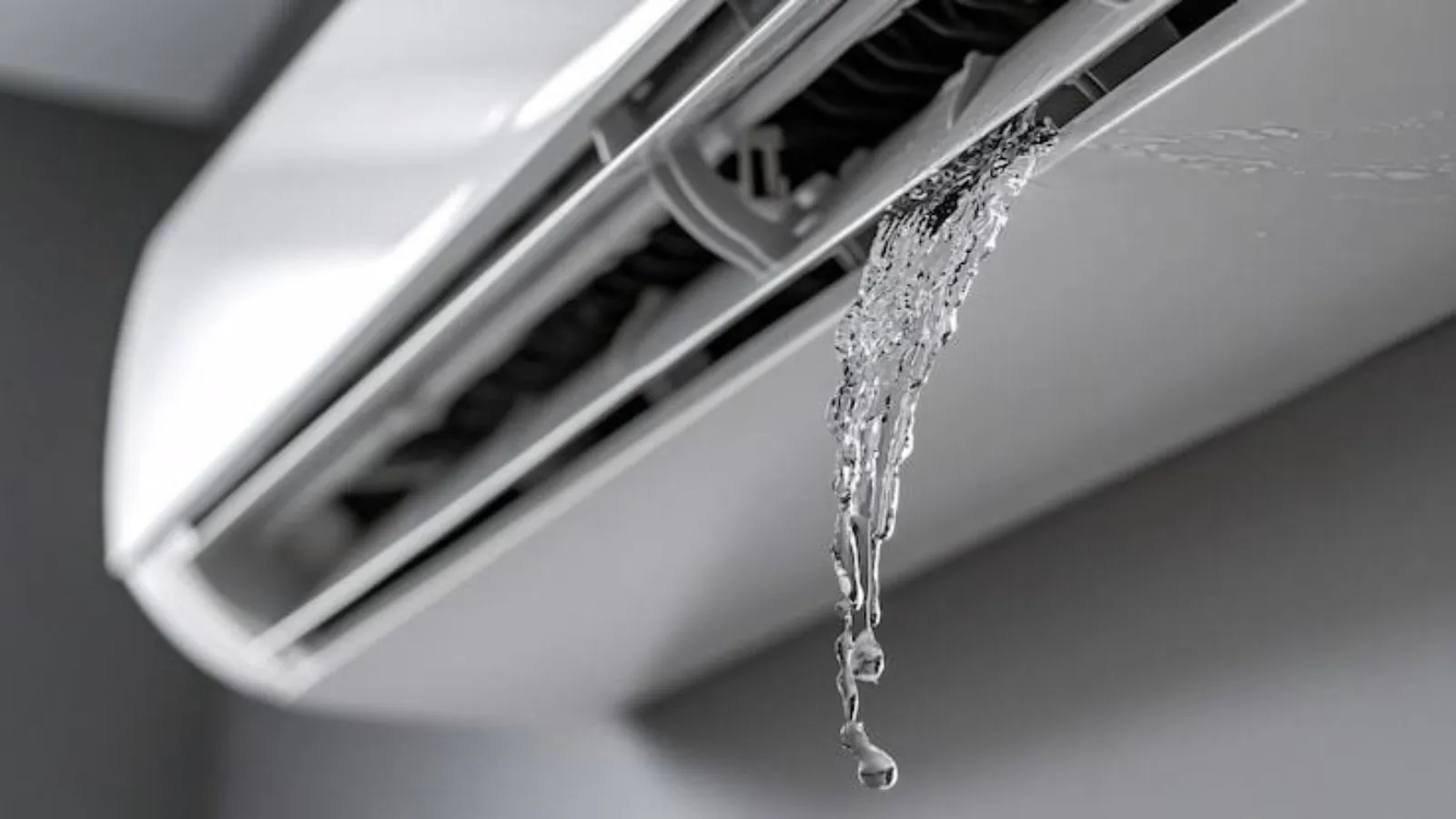
AC Leak Water Damage in Highland Park Homes
Air conditioners remove moisture from indoor air. That water, called condensate, is supposed to exit through a drain line. When the line clogs, the pan overflows and water can run into a ceiling, attic, closet or utility room.
Highland Park summers can run humid, and a system working hard can produce a lot of condensate. A small leak that drips quietly into an air handler closet can go unnoticed for weeks.
Our work focuses on the water damage, not the HVAC repair. A licensed HVAC technician should clear the drain line, replace the pan or fix the cause. We dry what the leak touched.
Where AC Leaks Usually Start
Most AC leaks come from a short list of problems.
Clogged condensate line
Algae and debris can block the drain. Water backs up into the pan.
Cracked or rusted drain pan
Older pans can corrode or crack and leak under the coil.
Frozen evaporator coil
A frozen coil melts when the system shuts off and can overflow the pan.
Disconnected drain fitting
A loose joint can send water onto framing or insulation.
Ceiling stain under the air handler?
Turn off the AC and call. We schedule the drying.
Our AC Leak Cleanup Process
Shut off the system
Turn off the air conditioner so it stops producing more condensate.
Find the wet zone
A moisture meter shows how far water spread through the ceiling or wall.
Remove wet material
Wet insulation and soft drywall are removed so cavities can dry.
Dry and monitor
Air movers and dehumidifiers run until readings are normal.
Why Slow AC Leaks Still Need Prompt Attention
An AC leak is rarely an emergency in the first minute, but it should not wait for weeks. Persistent dampness around an air handler can lead to stained ceilings, softened drywall and, if left, mold growth on organic material.
If you see a water stain below an attic air handler or a damp closet floor, turn off the unit and schedule a check. The sooner materials dry, the less has to be removed.
Take photos of the stain, the pan and the drain line if you can see them safely.
What We Dry and What an HVAC Pro Fixes
| Task | Who handles it | Notes |
|---|---|---|
| Clear clogged drain. | HVAC technician. | Prevents repeat overflow. |
| Replace drain pan. | HVAC technician. | Needed when rusted or cracked. |
| Dry wet ceiling and wall. | Our crew. | Meters guide the scope. |
| Remove soaked insulation. | Our crew. | Wet insulation holds water. |
Insurance and Condensate Damage
Slow leaks are often treated differently from sudden ones.
Illinois insurance guidance says policies commonly exclude maintenance-related seepage, so a long-running drip may not be covered. Ask your agent before assuming either way.
We document the damage with photos and moisture readings.
A Condensate Backup That Stained a Ceiling
A familiar case is an attic air handler with a clogged condensate line. Water backs up into the pan, overflows onto the ceiling below and leaves a stain that grows over several days. Often the homeowner sees a brown ring on the bedroom ceiling and assumes a roof leak.
The crew measures the ceiling, checks the attic insulation and looks for the pan and drain line. Wet insulation is removed, the drywall is dried or replaced and the HVAC technician clears the drain.
Clear drain lines on a schedule, and consider a float switch that shuts the system off if the pan fills. Those are HVAC decisions, and your technician can advise.
When Humidity and Condensation Mimic a Leak
Sometimes there is no leak at all. Cold ductwork in a humid attic can sweat and drip. Poorly insulated supply ducts can leave a wet streak on a ceiling. Closed-up summer homes with high indoor humidity can show damp spots near vents.
A moisture meter helps tell the difference. If the drywall is wet and the source is condensation, the fix may be duct insulation or better ventilation instead of a plumbing repair.
If a stain returns after painting, the moisture source is still active. See our page on ceiling water damage repair for how we handle the ceiling itself.
Safety Steps Before Help Arrives
These steps keep people safe while a crew is on the way.
- Turn off the water at the main or the fixture valve if you can reach it safely.
- Do not touch outlets, switches or appliances that are wet or standing in water.
- Stay out from under a bulging ceiling or a sagging section of wall.
- Do not use ceiling fixtures or fans that have water in them.
- Photograph the damage before moving anything, and keep damaged items for your insurer.
Standards and Sources We Use
Our approach follows the general framework of ANSI/IICRC S500, the published standard for professional water damage restoration. The insurance notes on this page reflect guidance from the Illinois Department of Insurance.
AC Leak Questions in Highland Park
Is an AC leak an emergency?
It depends. A steady drip into a ceiling is urgent. A small damp patch can wait a day or two.
Who fixes the drain line?
An HVAC technician. We dry and repair what the water touched.
Can an AC leak cause mold?
Persistent moisture on organic materials can support mold growth. Drying quickly lowers that risk.
Should I keep running the AC?
Not while it is leaking. Turn it off until a technician has found the cause.