
Hardwood Floor Water Damage in Highland Park Homes
Wood takes in water and expands. When one side of a board stays wet longer than the other, the board curls at the edges, which is called cupping. If the floor is tightly installed, boards can lift off the subfloor, which is called buckling.
Many Highland Park homes have original or refinished hardwood. Leaks from radiators, dishwashers and plumbing can reach boards from above or below. Water from below is often the more damaging, because it stays trapped under the finish.
We assess how wet the floor is, dry it with controlled equipment and tell you whether it can be saved or must be replaced.
How Hardwood Reacts to Water
The type of damage tells a lot about the cause.
Cupping
Edges rise higher than the center when moisture is trapped below the board.
Crowning
The center rises higher than the edges, often after sanding a cupped floor too early.
Buckling
Boards lift off the subfloor in severe cases.
Staining and darkening
Dark stains and black marks can signal long-term moisture.
Hardwood starting to cup?
Call soon. Early drying gives boards the best chance.
Our Hardwood Drying Process
Measure
Moisture meters check boards and subfloor to find wet areas.
Dry slowly
Controlled drying avoids splitting boards by removing moisture too fast.
Monitor
Readings are taken until the floor reaches normal levels.
Decide
After drying, we tell you if sanding and refinishing can work or if boards must be replaced.
Why Timing Matters for Hardwood
Boards that are dried soon after a leak often return close to flat. After several days of wetness, damage becomes permanent.
Do not sand a cupped floor until it is fully dry. Sanding wet wood can create crowning when the boards finish drying.
If water is actively spreading across the floor, call our 24/7 line. Otherwise, call as soon as you find the damage.
Owners of larger older homes east of the railroad tracks can read about water damage in East Highland Park.
Hardwood Condition and Likely Outcome
| Condition | Likely outcome | Notes |
|---|---|---|
| Light cupping, dried early. | Often flattens. | May need light sanding. |
| Severe cupping. | Sometimes replaced. | Depends on drying. |
| Buckling. | Usually replaced. | Boards lifted off subfloor. |
| Black staining. | Often replaced. | Long-term moisture. |
We do not guarantee outcomes. Moisture readings guide the decision.
Insurance and Hardwood Floors
Hardwood claims often depend on the cause of the water.
Illinois guidance notes that maintenance and seepage are commonly excluded. Sudden discharge is usually treated differently.
We provide moisture readings and photos.
A Radiator or Dishwasher Leak on a Wood Floor
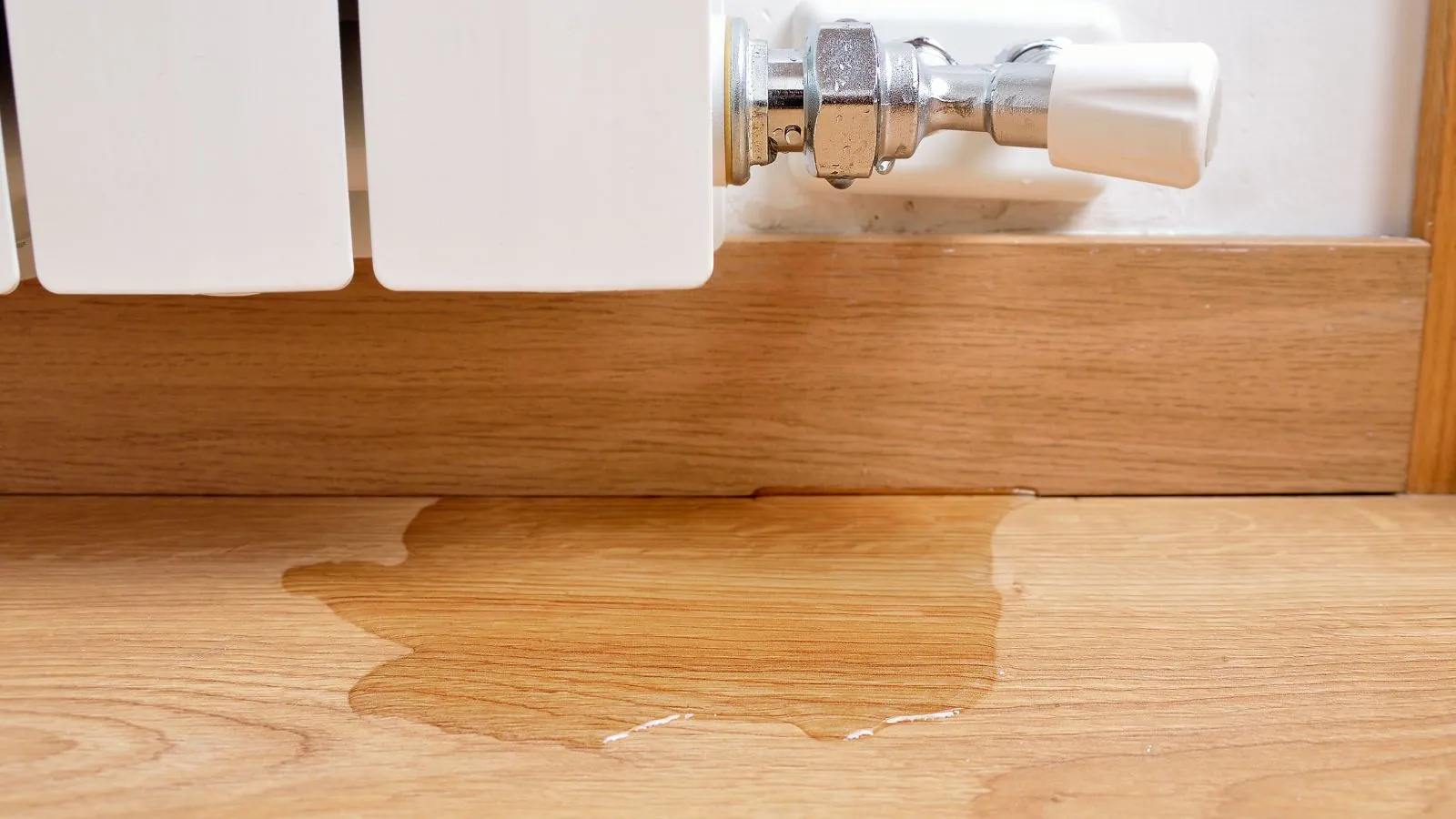
A leak from a radiator valve or a dishwasher can sit on hardwood for hours. Boards at the edge of the puddle begin to cup. Many Highland Park homes have older radiators and original hardwood, so this scenario is familiar.
We extract the surface water, place drying mats and dehumidifiers and take readings daily. Drying mats pull moisture from the boards from above, and the controlled approach helps the floor return to flat.
If boards remain cupped after drying, a flooring contractor decides whether to sand, refinish or replace. Do not sand until readings confirm the wood is dry.
When Hardwood Cannot Be Saved
Some floors cannot be saved. Boards that have buckled off the subfloor, floors soaked with contaminated water and floors with black staining across wide areas are usually replaced.
Replacement of a section is sometimes possible, but matching stain and wear is hard. A flooring contractor can advise. Keep a sample board for the matching process.
We tell you honestly what the readings show. See also our page on structural drying.
Protecting a Wet Hardwood Floor Right Away
Do these while you wait for help.
- Remove water with towels or a wet vacuum made for floors.
- Lift rugs and furniture off the wet area.
- Keep foot traffic off soft boards.
- Do not cover the floor with plastic or a tarp.
- Do not apply heat guns or high heat.
- Photograph the floor from several angles.
How Subfloor Moisture Changes the Outcome
Boards can look fine while the subfloor is still wet. Plywood and planks hold water and release it slowly into the hardwood above. We measure both layers, because drying only the surface can lead to cupping weeks later.
In older houses, the subfloor may be wide planks with gaps that let water pass quickly. Water from below, through a basement ceiling or crawl space, can also wet boards from underneath.
Safety Steps Before Help Arrives
These steps keep people safe while a crew is on the way.
- Keep foot traffic off wet or soft flooring.
- Do not use heat guns, space heaters or high heat to speed drying.
- Do not sand or refinish until readings show the floor is dry.
- Avoid walking on wet carpet, which pushes water into the pad.
- Keep electrical cords out of standing water.
Standards and Sources We Use
Our approach follows the general framework of ANSI/IICRC S500, the published standard for professional water damage restoration. The insurance notes on this page reflect guidance from the Illinois Department of Insurance.
Hardwood Floor Water Damage Questions
Can cupped hardwood go flat again?
Often yes if dried slowly and early.
Should I put fans on a wet hardwood floor?
Fans alone can dry the top too fast. Controlled drying works better.
Do you handle hardwood floor emergencies at night in Highland Park?
Call our 24/7 line for active water. We will advise.
Will the floor need refinishing?
After drying, many floors need sanding and refinishing.