
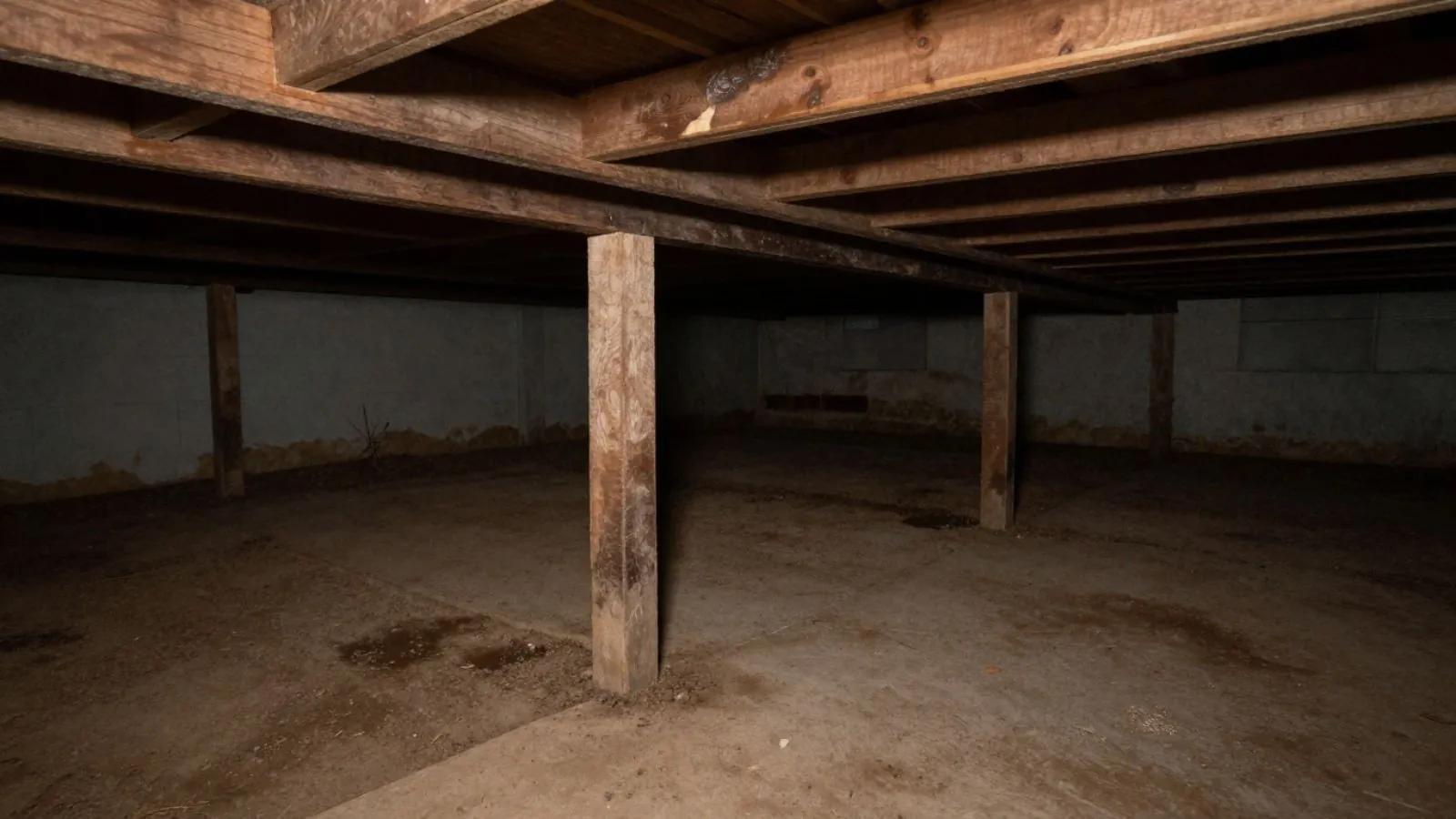
Crawl Space Water Damage in Highland Park Homes
A crawl space is the low space under a floor, often with a dirt or thin concrete bottom. When water collects there, it can wet insulation, joists and the underside of the subfloor. Because the space is dark and closed, problems hide for a long time.
In Highland Park, groundwater and heavy rain can push moisture into low areas. Ravines and slopes direct runoff toward some lots, and poorly graded soil can send water to a foundation wall.
The first step is a safe inspection. We check for standing water, wet insulation and damp framing, then extract and dry.
Why Crawl Spaces Collect Water
Several conditions make crawl spaces vulnerable.
Surface runoff
Water from downspouts or sloped yards can reach the foundation.
Plumbing leaks
Supply and drain lines often pass through crawl spaces.
High groundwater
A rise in the water table after heavy rain can seep in.
Poor ventilation
Damp air condenses on cool surfaces.
Water under your floor?
Call and we will schedule extraction and a moisture check.
Our Crawl Space Cleanup Process
Inspect safely
We check access, electrical safety and the extent of standing water.
Extract water
Small pumps remove standing water from the crawl space floor.
Remove wet insulation
Soaked insulation holds water against joists and is removed.
Dry framing
Air movers and dehumidifiers dry joists and subfloor.
Why Crawl Space Moisture Should Not Be Ignored
Damp framing can be a slow problem. Wood takes time to dry once it absorbs water, and persistent humidity can lead to odors and mold growth on organic materials.
The best time to act is soon after you find water. If you also see a pipe leak in the space, shut off water and call a plumber.
Take photos before cleanup and note any plumbing near the wet area.
Crawl Space Water Sources and Responses
| Source | Sign | Response |
|---|---|---|
| Plumbing leak. | Wet insulation under a bath. | Plumber repairs, we dry. |
| Rain intrusion. | Water after storms. | Extract, then grading and drainage review. |
| Groundwater. | Wet soil and standing water. | Extract and assess drainage. |
| Humidity. | Damp air and condensation. | Dry and review ventilation. |
Insurance and Crawl Space Water
Coverage depends on the source of the water.
Sudden plumbing discharge may be treated differently from groundwater seepage or flood. Illinois guidance notes that standard policies often exclude seepage and flood.
We document conditions with photos and moisture readings.
Standing Water in a Crawl Space After Heavy Rain
After a heavy rain, a homeowner opens the crawl space access and finds an inch or more of water on the ground. Insulation hangs wet from the joists. A musty smell has been building for weeks.
The crew sets up lighting, checks for electrical hazards and runs a small pump. Wet insulation is removed and bagged. Joists and subfloor are measured and dried with air movers and dehumidifiers.
Pumping water out does nothing for the next storm. Review how water got there, whether from downspouts, grading or a plumbing leak, and address that source.
Why Crawl Space Humidity Deserves a Second Look
Even without standing water, a crawl space can hold damp air. Vents that let humid summer air in, exposed soil and cool pipes all add moisture. That moisture can reach the wood above and slowly raise its moisture content.
A vapor barrier over the soil and proper insulation help in many cases. These are construction decisions beyond our scope, but we measure the conditions and tell you what we find.
If you have a dirt floor and a musty smell upstairs, a moisture check is a reasonable first step. See also our page on basement water damage cleanup.
Crawl Space Safety Notes
Crawl spaces are tight and can be risky.
- Do not enter if there is standing water near wiring.
- Use a flashlight and not a work lamp with a long cord.
- Wear gloves, boots and a mask.
- Tell someone you are going in.
- Look for sagging insulation and wet joists.
- Call for help if you are unsure.
Safety Steps Before Help Arrives
These steps keep people safe while a crew is on the way.
- Do not enter standing water near the electrical panel, outlets or a plugged-in sump pump.
- Turn off power at the breaker only if the panel and the floor around it are dry.
- If you smell gas or see damaged wiring, leave and call the utility or emergency services.
- Keep children and pets out of wet areas until a crew has checked them.
- Do not use a household vacuum on standing water.
Standards and Sources We Use
Our approach follows the general framework of ANSI/IICRC S500, the published standard for professional water damage restoration. The insurance notes on this page reflect guidance from the Illinois Department of Insurance.
Crawl Space Water Questions in Highland Park
Is water in a crawl space an emergency?
It can be urgent if it is deep or if a pipe is leaking. Call and we will advise.
Can wet insulation be dried in place?
Usually it is removed because it holds water against framing.
Will drying fix the source?
No. Drainage and plumbing problems need their own repair.
How long does crawl space drying take?
It depends on moisture levels and ventilation. Readings tell when the space is dry.