
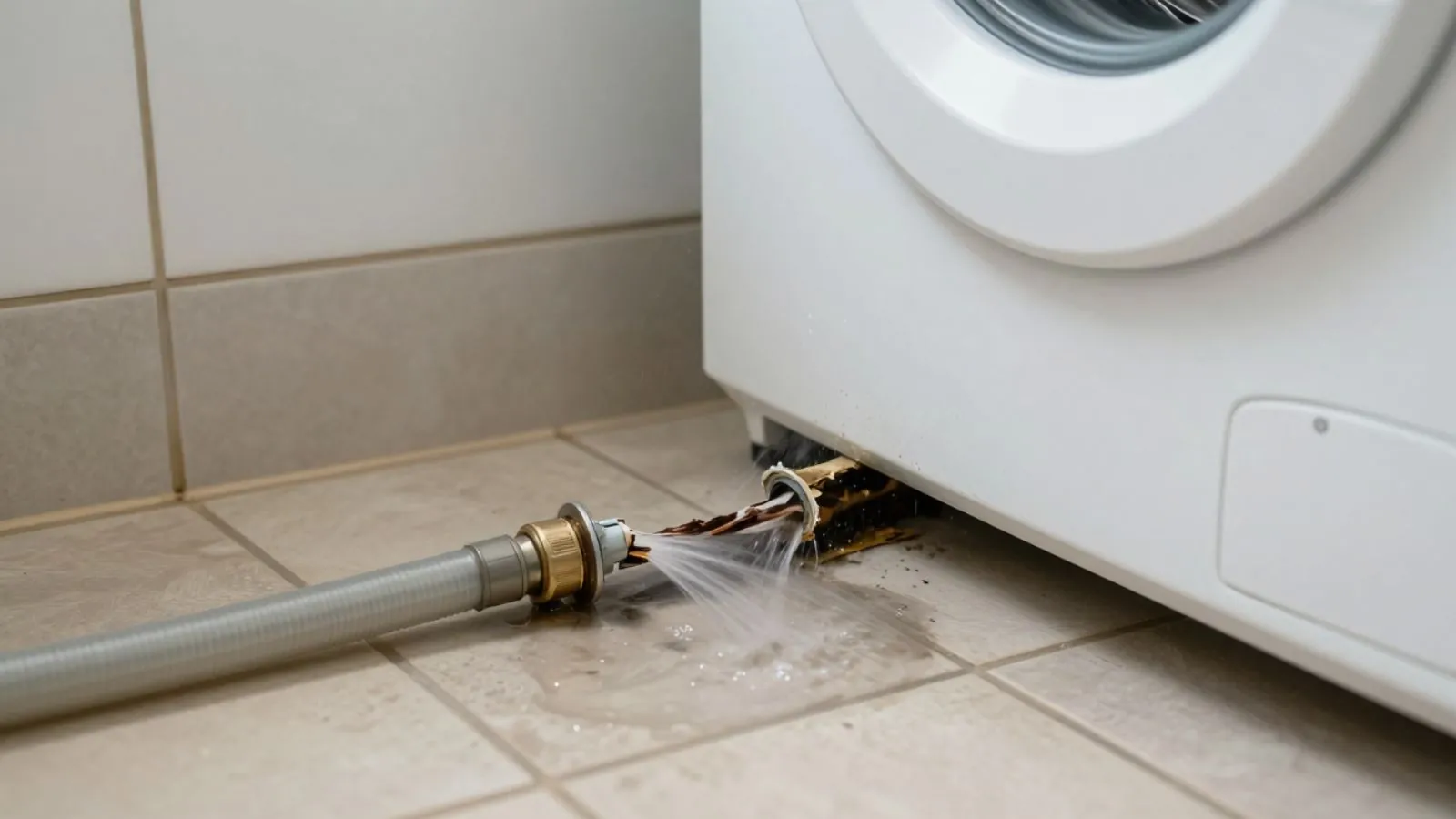
Appliance Leaks in Highland Park Homes
Appliance leaks are among the most common household water losses. A washer supply hose can burst when you are out. A dishwasher drain line can loosen behind a cabinet. A refrigerator ice maker line can drip for weeks inside a wall.
The damage depends on how long the water ran and how far it traveled. A leak that is caught quickly may only wet a floor. A slow leak behind a refrigerator can ruin cabinet bases and subfloor before the first stain appears.
Cleanup starts with extraction and drying. For leaks in kitchens, see our page on kitchen water damage restoration for cabinet and countertop details.
Common Appliance Leak Sources
Each appliance fails in its own way, but most failures involve hoses and fittings.
Washing machine hoses
Rubber supply hoses can split or pop off the valve. Braided steel hoses are more durable but still wear out.
Dishwasher lines
Supply fittings and drain connections can loosen with vibration and age.
Refrigerator ice maker lines
Small plastic lines can crack or lose a fitting behind the unit.
Utility sinks and drains
A clogged utility drain can overflow when the washer discharges.
Appliance flooding your floor?
Close the supply valve and call. We answer 24/7.
How We Handle an Appliance Leak
Stop the source
Close the supply valve to the appliance and unplug it if the outlet is dry.
Extract water
Standing water is removed from floors and cabinet bases.
Check behind and below
We use moisture meters to check cabinets, walls and the floor below the appliance.
Dry the structure
Air movers and dehumidifiers run until readings are back to normal.
Emergency Appliance Leak Response and What Happens While You Wait
The call-in scenario we hear often is a washer hose that burst while the family was away. By the time someone gets home, water has run across the laundry room and into the hallway. That kind of loss needs fast extraction.
Our line is open 24/7. If you come home to a flooded laundry area, turn off the water at the machine's valves, keep clear of outlets, and photograph the damage.
Do not run the appliance again until a licensed technician has checked the failure. A repeat failure can restart the loss.
Households near the Metra station on Lake Cook Road can read about water damage in Braeside.
Where Water From an Appliance Typically Goes
| Appliance | Where water goes | What we check |
|---|---|---|
| Washing machine. | Floor, wall base, floor below. | Subfloor and ceiling beneath. |
| Dishwasher. | Cabinet base and kitchen floor. | Cabinet toe kick and flooring. |
| Refrigerator line. | Behind unit and under flooring. | Wall base and hidden subfloor. |
| Utility sink. | Laundry floor and adjacent rooms. | Drain connections and wall base. |
Insurance and Appliance Leaks
Sudden appliance discharge is often covered under a standard homeowners policy, but the details vary.
Read your policy for water backup and discharge terms. Illinois guidance notes that maintenance and seepage are commonly excluded.
We document the loss with photos and moisture logs. Your insurer decides what is covered.
The Washer Hose That Failed While Nobody Was Home
A burst washer hose is the call we hear most. The family comes home to a wet laundry room and a puddle spreading across a hallway. The hose may have been under pressure for years before it split.
Our crew extracts the water, checks the floor below if the laundry is on an upper level, and measures the walls beside the machine. Water that runs under a washer and into the next room can reach areas the family has not seen yet.
Replacing rubber hoses with braided steel hoses and closing the supply valves when the washer is not in use are both simple ways to lower the risk. Ask your plumber about options.
Condensate Backups and Dishwasher Drains
Not every appliance leak is a burst. Dishwasher drain lines can back up into the sink and spill. Refrigerator ice maker lines can leak slowly behind the unit. A condensate pump on a high-efficiency furnace or an AC can fail and overflow.
These slower leaks often go unnoticed for weeks. A soft spot in the floor, a musty smell near the appliance or a stain on the ceiling below can be the first clue.
If you find any of these, shut off the appliance supply, photograph the area and call. We use moisture meters to find how far the water has traveled, which matters for any insurance conversation.
Safety Steps Before Help Arrives
These steps keep people safe while a crew is on the way.
- Turn off the water at the main or the fixture valve if you can reach it safely.
- Do not touch outlets, switches or appliances that are wet or standing in water.
- Stay out from under a bulging ceiling or a sagging section of wall.
- Do not use ceiling fixtures or fans that have water in them.
- Photograph the damage before moving anything, and keep damaged items for your insurer.
Standards and Sources We Use
Our approach follows the general framework of ANSI/IICRC S500, the published standard for professional water damage restoration. The insurance notes on this page reflect guidance from the Illinois Department of Insurance.
Appliance Leak Questions From Highland Park Homeowners
Do you handle appliance leak emergencies at night or on weekends in Highland Park?
Yes. The line is open 24/7, every day of the year.
Can I keep using the washer after a leak?
Not until the failed hose or fitting is repaired. Using it again can repeat the flood.
What if the leak is behind the fridge?
Hidden leaks need a moisture check. Water can run under flooring and into the subfloor without showing.
Does homeowners insurance cover a burst washer hose?
Often a sudden failure is treated differently from slow seepage, but policies vary. Ask your agent.