
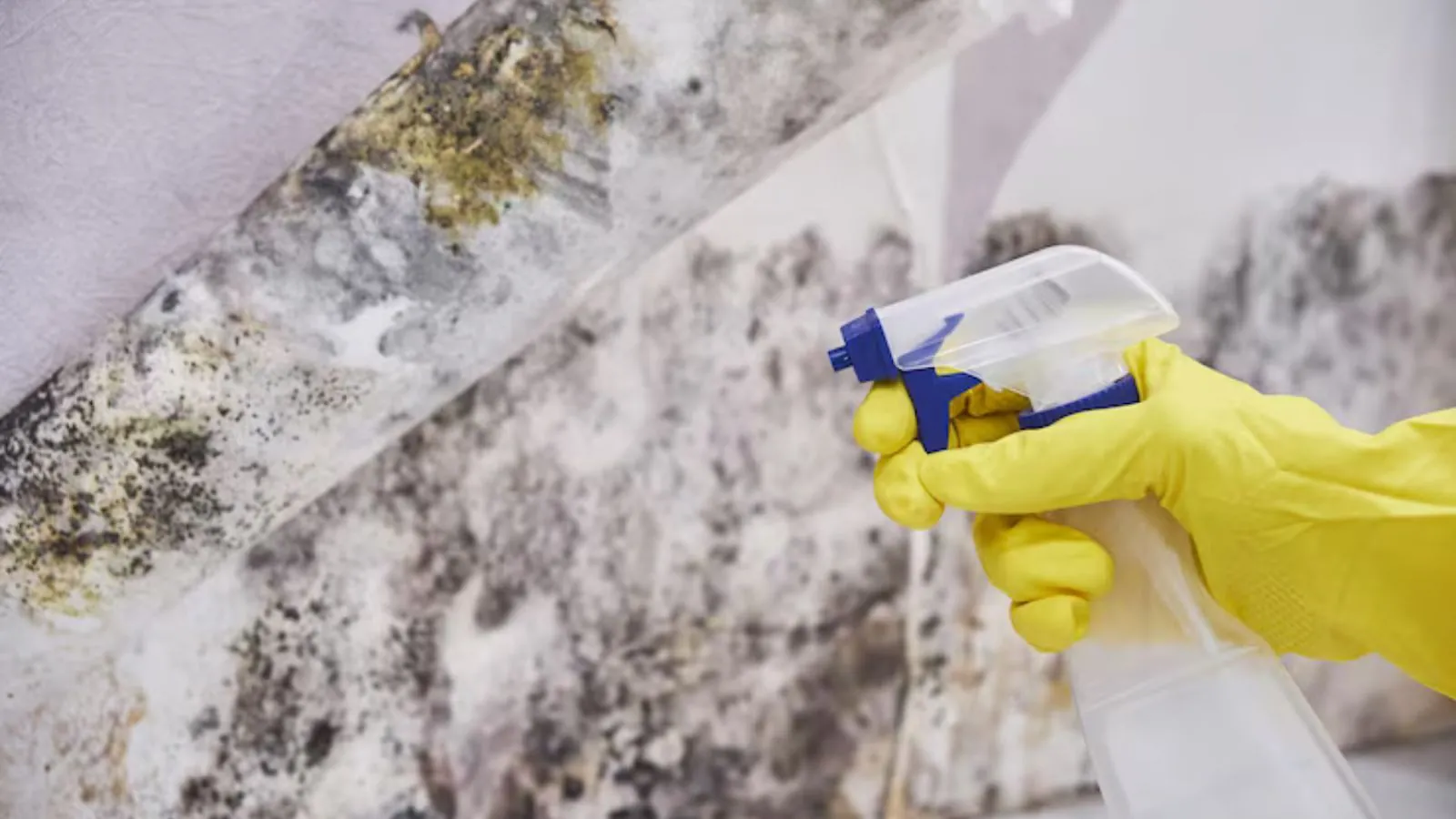
Mold Remediation in Highland Park Homes
Mold needs moisture and organic material. After a leak, drywall paper, wood and carpet pad can all support growth if they stay wet. Fixing the moisture source is the most important step.
Illinois has a Mold Remediation Registration Act, Public Act 103-0893. As described by the Illinois Department of Public Health, it requires third-party certification and registration with the department for those who perform mold remediation, effective January 2025. Check the department's site for current requirements.
We handle the drying, containment and removal of affected materials, and we explain the plan before work starts.
Signs of Mold and Moisture Problems
These signs suggest a moisture problem that needs attention.
Visible dark or fuzzy growth
Growth on drywall, baseboards or ceilings points to long-term moisture.
Persistent musty odor
A lingering smell can mean hidden growth or wet materials.
Water stains that return
Stains that come back after painting suggest an ongoing leak.
Condensation and damp corners
Humidity problems can support growth on cool surfaces.
Suspect mold after a leak?
Call to schedule an assessment.
Our Mold Remediation Process
Find and fix the moisture
Remediation does not last unless the source is stopped.
Contain the area
Plastic barriers and air filtration help keep the work area separate.
Remove affected materials
Porous materials with growth are removed and bagged.
Clean and dry
Surfaces are cleaned and the area is dried to normal moisture levels.
What Symptoms Should Prompt an Assessment
Look for visible growth, a musty smell, or a recent leak that was not dried quickly. Any of these can justify a check.
We do not make health claims. If you have concerns about your health, talk with a medical professional.
For homes being sold or refinanced, a separate third-party assessor can perform clearance testing after remediation. See our blog for how that works.
Mold Cleanup Approaches
| Material | Typical approach | Reason |
|---|---|---|
| Drywall with growth. | Removed. | Porous and hard to clean. |
| Framing lumber. | Cleaned and dried. | Solid wood can often be treated. |
| Carpet and pad. | Removed. | Hard to clean fully. |
| Hard surfaces. | Cleaned. | Non-porous. |
Mold and Insurance
Mold coverage varies widely.
Many policies limit or exclude mold unless it follows a covered water loss. Check your policy and ask your agent before work begins.
We document conditions with photos and moisture readings.
Why Moisture Comes Before Cleaning
A common mistake is to clean visible growth and call it done. If the wall is still wet, growth returns. Remediation works when moisture is controlled first, then affected materials are removed, then the space is cleaned and dried.
Containment matters too. Plastic barriers and air filtration reduce the spread of dust while materials are removed. The work area is kept under negative air pressure when appropriate.
We make no health claims on this site. If you have concerns about health in your home, talk with a medical professional.
Questions to Ask Any Mold Contractor in Illinois
Ask whether the contractor meets the requirements of the Illinois Mold Remediation Registration Act, Public Act 103-0893. The Illinois Department of Public Health describes it as requiring third-party certification and registration for those who perform remediation, effective January 2025.
Ask for a written scope that names the areas, the materials to be removed and how the work area will be contained. Ask who will perform clearance, and make sure it is someone independent of the remediator.
For more, read our guide on structural drying and our blog posts on mold clearance testing and mold insurance coverage.
What a Written Mold Scope Should Include
Ask for these items before work begins.
- The areas and materials affected.
- The moisture source and how it will be fixed.
- How the work area will be contained.
- What will be removed and how it will be disposed of.
- Who will perform clearance and when.
- How the work area will be dried and verified.
Why We Say Little About Testing on This Page
Air and surface sampling can be useful, but results are easy to misread. They depend on when and where samples are taken and what baseline is used. We leave sampling to independent assessors, who write the protocol and review the results.
Our role is moisture control, containment, removal and drying. Keeping those roles separate protects you.
Safety Steps Before Help Arrives
These steps keep people safe while a crew is on the way.
- Do not disturb, brush or sand visible growth.
- Do not run fans across affected surfaces.
- Keep the area closed off where you can.
- Fix the moisture source before any cleaning.
- If you have health concerns, talk with a medical professional.
Standards and Sources We Use
Our approach follows the general framework of ANSI/IICRC S520, the published standard for professional mold remediation, and the Illinois Mold Remediation Registration Act, Public Act 103-0893, as described by the Illinois Department of Public Health. The insurance notes on this page reflect guidance from the Illinois Department of Insurance.
Mold Symptoms and Questions in Highland Park
What are the signs of mold in a house?
Visible growth, a musty smell and recurring water stains are common signs.
Will cleaning with bleach solve it?
Surface cleaning does not fix a moisture source and may not remove growth inside porous materials.
Do you test for mold?
Testing and clearance are usually done by a separate third-party assessor.
Is mold remediation an emergency?
Usually not, but fix the moisture source quickly.