
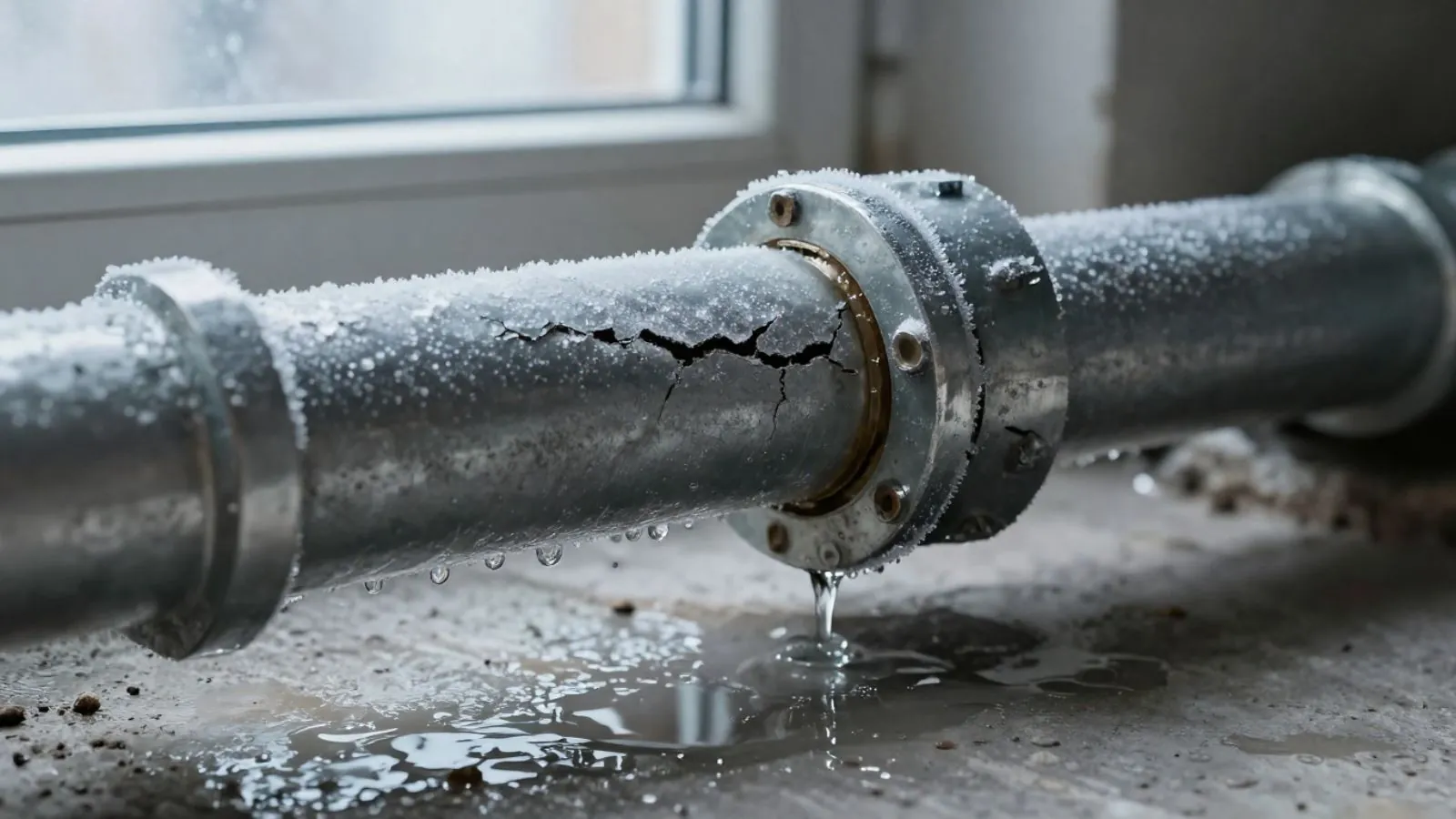
Frozen Pipe Damage Shows Up After the Thaw
Ice inside a pipe expands and can split the metal or loosen a joint. The pipe may hold until temperatures rise, then leak heavily as the ice melts. That delay surprises many homeowners, who find water hours after the cold breaks.
Highland Park sits on the Lake Michigan shore, and lake wind can push brutal wind chill through older frame homes. Pipes in exterior walls, garages, unheated porches and crawl spaces are the usual victims.
If a pipe is frozen but not yet leaking, shut the main water supply and call a plumber. If it has already split, the cleanup follows the same path as a burst pipe, starting with extraction.
Where Freeze Breaks Tend to Happen
Pipes freeze where cold air reaches them and warm air does not.
Exterior walls
Supply lines in poorly insulated outer walls lose heat first, especially on the north side.
Garages and porches
Unheated spaces with a water line passing through them are common freeze points.
Crawl spaces
Open vents and thin insulation let cold air sit around pipes for days.
Outdoor spigots
A hose left attached can trap water that freezes back into the wall line.
Water appearing after a deep freeze?
Close the main shutoff and call. The line is open 24/7.
Our Freeze Break Cleanup Process
Stop the water
Close the main shutoff and open a faucet to relieve pressure if you can do so safely.
Find every wet area
A split pipe in a wall can leak into the floor below, so we check adjacent rooms.
Extract and open
Standing water is removed and affected drywall or ceiling sections are opened for drying.
Dry and verify
Equipment runs with readings logged until framing and finishes reach dry targets.
Emergency Help Before You Try to Thaw a Pipe
Do not use an open flame to thaw a pipe. A hair dryer on low is safer, but only if the pipe is not already cracked. A cracked pipe will begin pouring water the moment it warms.
If you see frost on a pipe and the water has stopped, treat it as urgent. Call a plumber for the pipe and call us if any water has already reached floors or walls. The line is open 24/7, which matters most on the coldest nights.
Before leaving a cold house, keep cabinet doors open under sinks and let a faucet drip. Those steps help but do not guarantee anything, so keep the shutoff location in mind.
Frozen Pipe Damage by Location
| Pipe location | Common damage | Typical response |
|---|---|---|
| Exterior wall. | Wet insulation and drywall. | Open the wall and dry the cavity. |
| Attic or ceiling. | Stained and sagging ceiling. | Release trapped water and dry the structure. |
| Crawl space. | Wet subfloor and insulation. | Extract, remove wet insulation, dry joists. |
| Garage. | Wet slab and stored items. | Extract and move contents. |
Freeze Damage and Your Policy
Coverage varies, and a sudden freeze break is treated differently from long-term seepage.
Illinois insurance guidance says standard policies often exclude maintenance seepage and flood. Check your policy language and file promptly after a loss.
Keep your drying logs, photos and receipts together. Your insurer decides coverage.
The Cold Snap Scenario Highland Park Homeowners Know
A typical call comes after the coldest night of the winter. A family notices low pressure at one faucet, or they hear dripping inside a wall. By the afternoon, temperatures rise and the ice in the pipe begins to melt. That is when a hidden split starts to leak.
The wall may be an exterior one on the north side. The leak may be in a garage ceiling or a crawl space. The crew traces the water, extracts it and opens the affected wall or ceiling so the cavity can dry.
If insulation is wet, it is usually removed. Wet insulation holds water against framing and slows drying. New insulation goes back after the cavity reaches dry targets.
Reducing the Risk Before the Next Freeze
Insulate pipes in exterior walls, garages and crawl spaces. Seal air leaks around where pipes enter the house. Disconnect garden hoses and shut off exterior spigots for the season. These steps help, though none of them is a guarantee.
Know your main shutoff. When a freeze break happens, minutes matter. Everyone in the household should know where it is and how to turn it.
If you leave town in winter, keep the heat on. A furnace that fails while you are away is how many freeze losses start. A neighbor who can check on the house also helps. If a loss does happen, our burst pipe page describes the next steps.
Safety Steps Before Help Arrives
These steps keep people safe while a crew is on the way.
- Turn off the water at the main or the fixture valve if you can reach it safely.
- Do not touch outlets, switches or appliances that are wet or standing in water.
- Stay out from under a bulging ceiling or a sagging section of wall.
- Do not use ceiling fixtures or fans that have water in them.
- Photograph the damage before moving anything, and keep damaged items for your insurer.
Standards and Sources We Use
Our approach follows the general framework of ANSI/IICRC S500, the published standard for professional water damage restoration. The insurance notes on this page reflect guidance from the Illinois Department of Insurance.
Frozen Pipe Questions From Highland Park Residents
Do you handle frozen pipe emergencies at night or on weekends in Highland Park?
Yes. The 24/7 line runs through nights, weekends and holidays, which is when most freeze breaks happen.
Should I thaw a frozen pipe myself?
Only if the pipe is intact and no water is leaking. If you see cracks, shut off the main and call a plumber and us.
How long does it take for a freeze break to cause damage?
Water can flow for hours once the ice melts. Any wet drywall or flooring should be checked right away.
Does a pipe have to burst for me to call?
No. If you find water in a cabinet, wall or ceiling after a cold night, call even if the pipe looks intact.