
Structural Drying in Highland Park: Why Surface Dry Is Not Dry
After a leak or flood, the surface of a floor or wall can feel dry while the material behind it is still wet. Framing, subfloor and insulation can hold moisture for days or weeks. Structural drying is the controlled process of pulling that moisture out.
In Highland Park, humid summers and cold, closed-up winters affect how quickly materials dry. Indoor humidity can stall drying unless equipment manages it.
The industry reference for this work is ANSI/IICRC S500, which describes drying goals and monitoring. We follow its general approach of measuring, drying, and measuring again.
Symptoms That Show a Building Is Still Wet
These signs mean drying is not finished, even if the area looks normal.
Musty or earthy odor
Odor often means moisture remains in hidden cavities.
Cupping or buckling floors
Wood that swells or cups is still taking on water or releasing it.
Paint bubbling or peeling
Moisture moving through drywall lifts paint.
Warm, damp feeling walls
A cool damp wall can mean evaporation is still occurring inside.
Walls or floors still damp?
Call to schedule drying with documented readings.
How We Dry a Structure
Measure
Moisture meters and thermal imaging map wet materials and set a baseline.
Place equipment
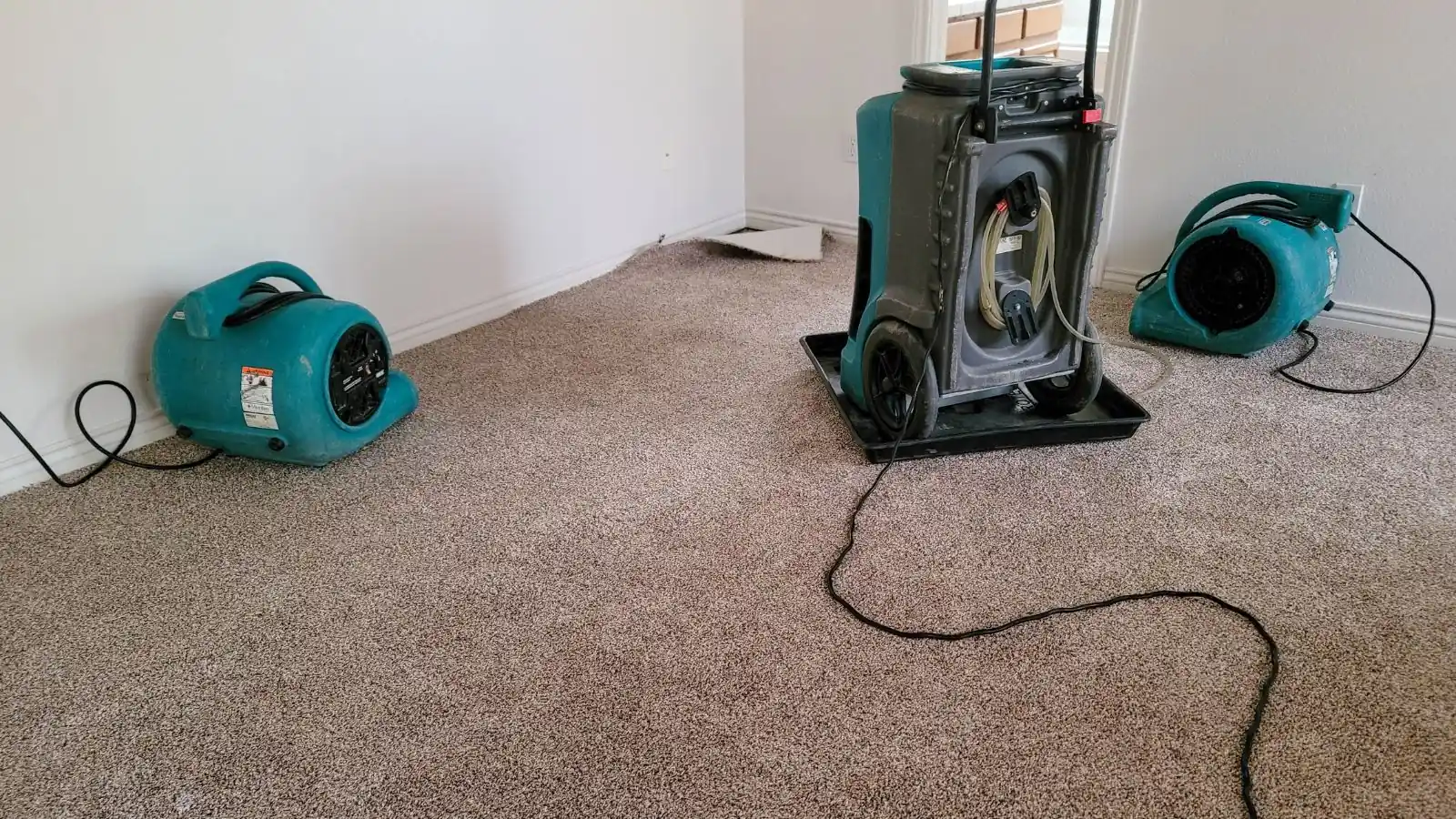
Air movers and dehumidifiers are placed to move and remove moisture from air and surfaces.
Monitor daily
Readings are recorded each visit and equipment is adjusted.
Confirm dry
Equipment comes out only when readings reach dry targets.
What Dehumidifiers and Air Movers Actually Do
Air movers push air across wet surfaces to help water evaporate. Dehumidifiers then pull that water out of the air. Without a dehumidifier, the moisture simply stays in the building as humidity.
Low grain refrigerant dehumidifiers work well in warm spaces. Desiccant units can work in cooler ones, such as an unheated basement in winter.
Closed doors and windows help during drying. The equipment is noisy and runs constantly, which is normal. Turning it off early is how damp spots return.
Drying Time Factors
| Factor | Effect | Notes |
|---|---|---|
| Material. | Dense materials dry slowly. | Hardwood and framing take longer than carpet. |
| Water category. | Contamination may require removal. | Removal speeds drying. |
| Indoor humidity. | High humidity slows evaporation. | Dehumidifiers manage this. |
| Temperature. | Warmth speeds drying. | Cold spaces need desiccant equipment. |
| Time since loss. | Longer exposure means deeper moisture. | Faster response helps. |
We do not promise a number of days. Readings tell when drying is done.
Insurance and Drying Documentation
Drying logs give your insurer a clear record.
Illinois guidance says to file promptly and keep records. We provide dated moisture readings, equipment logs and photos.
Coverage is your insurer's decision.
What Daily Monitoring Looks Like
A drying job is a series of visits. On each one, the technician records readings in the same spots, checks the dehumidifier output and moves air movers as walls and floors change. The log is the evidence that the job is working.
Readings drop quickly at first, then slowly. Dense materials such as hardwood, plaster and framing release water gradually. The last few percentage points take longer than the first dozen.
A final reading set that matches dry targets is what ends the job. If a contractor removes equipment without one, ask for the numbers.
Common Drying Mistakes to Avoid
The first mistake is turning off equipment because it is loud or because the surface feels dry. The second is opening windows on a humid day. The third is covering wet walls with paint or new flooring before they are dry.
Another is drying too fast, especially with hardwood. Rapid drying can split boards. Controlled drying with humidity management is gentler.
If you plan to renovate after a water loss, ask your contractor to see the final drying readings. They protect new materials from hidden moisture. For more, read our page on hardwood floor water damage repair.
What You Will See During a Drying Job
A few things are normal.
- Loud air movers and dehumidifiers running around the clock.
- Slightly warmer air in the drying area.
- Baseboards removed and small holes drilled for air flow.
- A technician taking readings with a meter at each visit.
- Condensate from dehumidifiers drained to a sink or tub.
- A final reading set before equipment is removed.
Safety Steps Before Help Arrives
These steps keep people safe while a crew is on the way.
- Keep foot traffic off wet or soft flooring.
- Do not use heat guns, space heaters or high heat to speed drying.
- Do not sand or refinish until readings show the floor is dry.
- Avoid walking on wet carpet, which pushes water into the pad.
- Keep electrical cords out of standing water.
Standards and Sources We Use
Our approach follows the general framework of ANSI/IICRC S500, the published standard for professional water damage restoration. The insurance notes on this page reflect guidance from the Illinois Department of Insurance.
Structural Drying Symptoms and Questions
How can I tell if my walls are still wet?
Look for odor, bubbling paint, cupping floors or cold damp surfaces. A moisture meter gives the real answer.
Do you handle drying emergencies at night or on weekends in Highland Park?
Our 24/7 line handles urgent losses. Call and we will advise on timing.
Can I turn the dehumidifier off at night?
No. Continuous operation is how drying works. The equipment should stay on until readings are dry.
Will I see a drying log?
Yes. We record readings and equipment each visit.