
What Mitigation Means and What It Does Not
Mitigation is the early work that limits the spread of damage. It includes stopping the source, removing water, removing materials that cannot be saved and drying what can. It is separate from reconstruction, which rebuilds finished surfaces afterward.
Think of mitigation as stopping the bleeding and reconstruction as the rebuild. If mitigation is done well, reconstruction is smaller and cheaper. If it is rushed or skipped, the rebuild has to deal with hidden moisture.
The industry reference is ANSI/IICRC S500, a published standard for professional water damage restoration. We follow its general framework of assess, remove, dry and verify.
The Mitigation Steps in Order
Emergency call and triage
The dispatcher asks what happened, where the water is and whether it is still flowing, then gives safe first steps.
Inspection and moisture mapping
The crew checks the source, the water category and the wet area with meters and thermal imaging.
Water removal
Pumps and extractors remove standing water, then wet carpet or pad is dealt with.
Demolition where needed
Materials that cannot be dried, such as soaked pad or wet insulation, are removed.
Structural drying
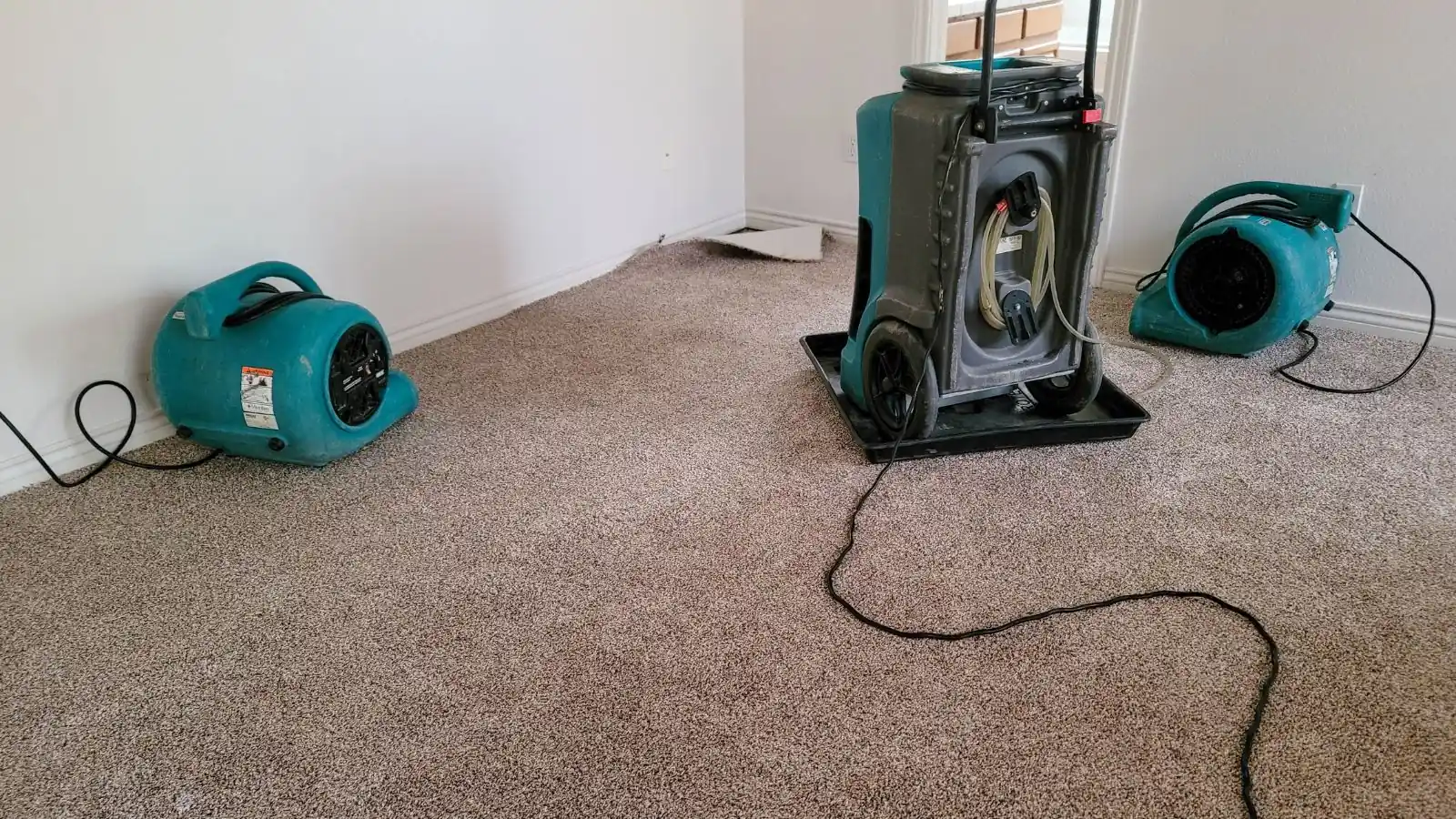
Air movers and dehumidifiers run while readings are logged.
Monitoring and verification
Readings are checked each visit until the building reaches dry targets.
Why Moisture Mapping Comes Before Equipment
Equipment placement depends on where the water went. A crew that sets fans without measuring may dry the surface and miss the wall cavity. Moisture meters and thermal imaging show hidden wet areas without tearing into walls.
A baseline reading also gives you a way to confirm the job is done. Without a log, drying is a guess.
Water damage right now?
Call the 24/7 line. We explain scope and price before work starts.
Equipment and What Each Piece Does
| Equipment | Purpose | What you notice |
|---|---|---|
| Submersible pump. | Removes deeper standing water. | Brief, loud work at the start. |
| Wand extractor. | Pulls water from carpet and floors. | Wet vacuum sound. |
| Air mover. | Pushes air across wet surfaces. | Constant fan noise. |
| Dehumidifier. | Removes moisture from the air. | Warm air and a steady hum. |
| Moisture meter. | Measures wetness in materials. | Short checks each visit. |
How Long Mitigation Takes
Extraction often takes hours. Drying takes longer and depends on materials, humidity and temperature. Dense materials such as hardwood and framing dry slowly, while carpet dries faster.
We do not promise a number of days, because readings, not a calendar, tell us when a building is dry. See our guide on how long water damage takes to dry for the factors involved.
Highland Park Local Note
Highland Park homes include older construction near the lake and in the ravine neighborhoods. The city's building code and its Building Division, at 1150 Half Day Road, govern permits for repairs that follow mitigation.
Rain east of Green Bay Road drains toward Lake Michigan, according to the Park District's watershed information, so lots near the bluffs can see fast runoff in storms.
Sources: City of Highland Park Building Division information, Park District of Highland Park watershed material.
Signs a Mitigation Job Was Done Properly
Ask for these items.
A dated moisture log with readings. Photos of the work. A clear list of what was removed and why. A written scope before work started.
If you want to see how this plays out for a specific problem, read our pages on burst pipe damage and basement water cleanup.
What Reconstruction Looks Like After Mitigation
Once the structure is dry, reconstruction replaces what was removed. Drywall is hung, taped, textured and painted. Flooring is installed. Cabinets and trim go back. Each trade follows the one before it, and a delay in drying delays everything after it.
That is why mitigation records matter. A contractor who sees final dry readings can build with confidence. A contractor who sees none may ask for more testing before closing up a wall.
Some companies handle both mitigation and reconstruction. Others hand off. Either way, ask for a written scope for each phase so you can see where one ends and the next begins.
Questions to Ask Before You Approve a Mitigation Plan
Ask what equipment will be placed and how many units. Ask how often technicians will visit and how readings will be shared. Ask what materials will be removed and why. Ask who handles disposal and how the work area will be protected from dust.
Ask what could change the plan. Hidden moisture can expand the scope, and a good crew explains how that would be communicated. Ask for the plan in writing before work starts.
These questions are not a test. They simply help you understand a process that can feel confusing when you are stressed. For more detail on specific losses, see our pages on water extraction and flood damage cleanup.
A Mitigation Day From the Homeowner's Side
On the first day, expect a lot of activity. The crew arrives, walks the property and explains the plan. Pumps run. Wet pad and carpet may come up. Baseboards come off. Equipment is placed and turned on, and the house gets noisy and warm.
On later days, visits are shorter. A technician checks readings, adjusts equipment and removes anything no longer needed. You may see fewer people and less noise, but the machines keep running.
On the last visit, the crew takes final readings and removes equipment. You receive a record of the work. The house is dry but unfinished, because rebuilding starts after that. Knowing this rhythm helps you plan work and family routines.
What You Can Do to Help the Crew
Small actions on your side speed things up.
- Clear a path from the door to the wet area.
- Move valuables and small items to a dry room.
- Tell the crew about any pets, medical devices or work-from-home needs.
- Keep the thermostat steady and the doors closed in the drying zone.
- Leave the equipment alone and call if something seems wrong.
- Save photos and receipts in one folder.
Standards and Sources
Our approach follows the general framework of ANSI/IICRC S500, the published standard for professional water damage restoration. The insurance notes on this page reflect guidance from the Illinois Department of Insurance.
Mitigation Questions From Highland Park Homeowners
Do I need a permit for mitigation work in Highland Park?
Emergency extraction and drying usually do not. Rebuild work such as replacing walls may. Check with the Building Division.
Can I start mitigation myself?
You can stop the source and remove small amounts of water. Hidden moisture needs meters and drying equipment.
Why does the equipment run for days?
Materials release moisture slowly. Turning equipment off early leaves hidden damp spots.
What happens after mitigation?
Reconstruction replaces removed materials and refinishes surfaces.