
Why Empty Homes Are at Risk
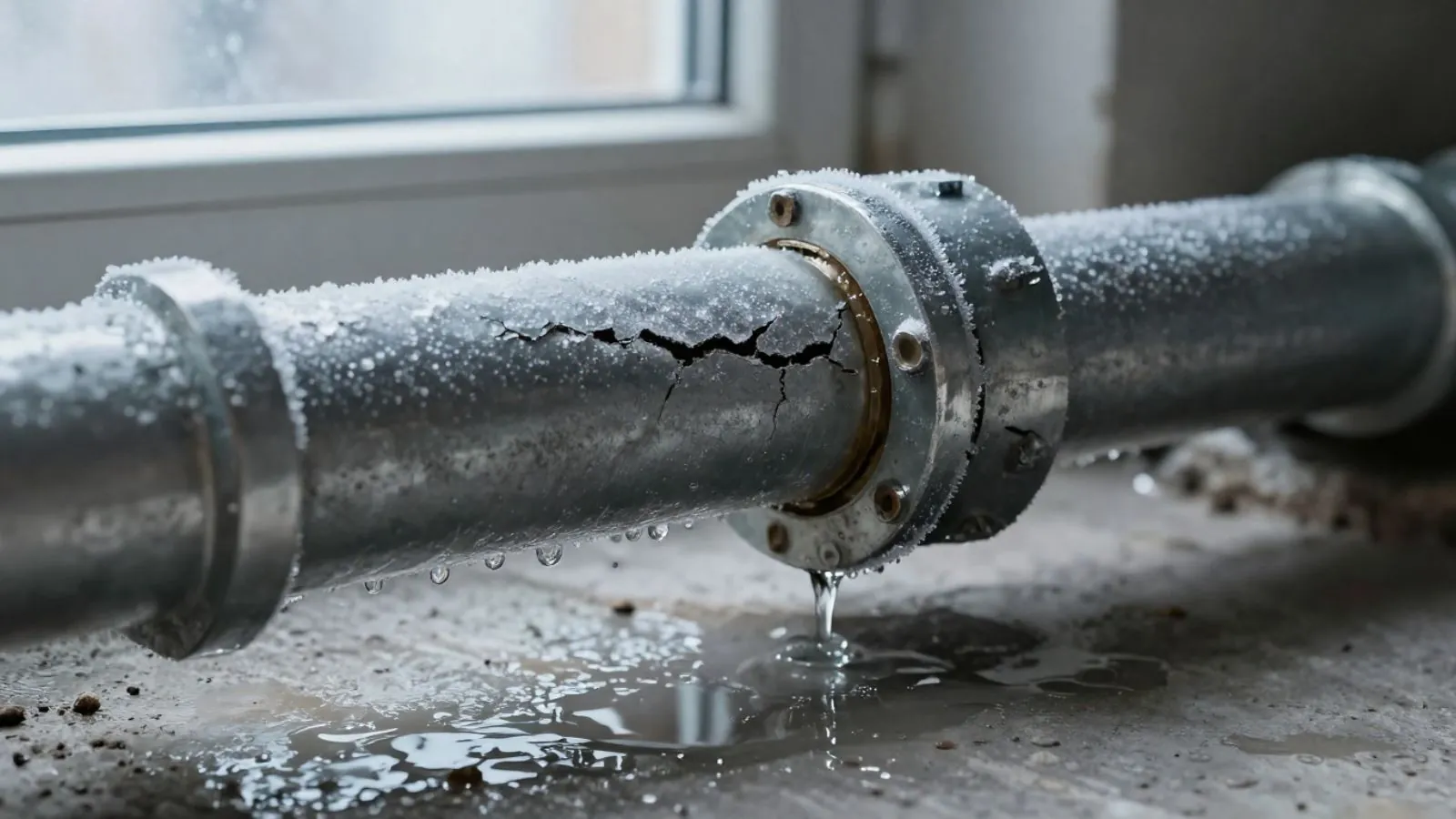
When nobody is home, a small failure has hours or days to grow. A washer hose that bursts at midday can run until you return. A pipe that freezes during a cold week can split and flood a lower level.
A short checklist before you leave reduces that risk. None of these steps guarantees anything, but they cut the odds and limit how much water can flow.
The Before-You-Leave Checklist
Know your main shutoff
Everyone in the household should know where it is and how to close it.
Consider shutting it off for long trips
Closing the main stops supply to every line in the house.
Check hoses
Look at washer and dishwasher hoses for bulges and cracks.
Clear gutters and downspouts
Water should move away from the foundation.
Test the sump pump
Pour water into the pit and watch the pump start and stop.
Seasonal Risks and Steps
| Season | Main risk | Step |
|---|---|---|
| Winter. | Frozen pipes. | Keep heat on, open cabinet doors, insulate exposed pipes. |
| Spring. | Heavy rain and snowmelt. | Test the sump pump and clear window wells. |
| Summer. | AC condensate and storms. | Check drain lines and drains. |
| Fall. | Leaves in gutters. | Clean gutters and downspouts. |
Water damage right now?
Call the 24/7 line. We explain scope and price before work starts.
Small Devices That Help
Leak sensors
Low-cost sensors near water heaters and washers send an alert when wet.
Smart shutoff valves
Some close the main automatically when a leak is sensed.
Battery backup for sump pumps
A backup keeps the pump running during a power loss.
A trusted neighbor
Ask someone to check the house during a long absence.
Highland Park Local Note
Highland Park's Lake Michigan weather means cold snaps and heavy storms. The city notes that main breaks and similar events can take several hours to repair after shutoff, so a home with a leak inside should not wait for the city.
Ravinia Festival's summer season, which the Chicago Symphony Orchestra has called home since 1936, fills the area with visitors, and many residents travel in summer too. Plan your leak checks before you go.
Sources: City of Highland Park Public Works materials, Ravinia Festival history.
If You Come Home to a Flood
Act in this order.
Do not enter if water is near the electrical panel. Close the main shutoff if you can reach it safely. Call a plumber for the source and our 24/7 line for the water.
Read our pages on frozen pipe water damage and water extraction to see what happens next.
A Winter Travel Checklist
Before a winter trip, set the thermostat to a safe temperature rather than turning heat off. Open cabinet doors under sinks on exterior walls so warm air reaches the pipes. Drain and shut off outdoor spigots. Ask a neighbor to look in.
Consider shutting off the main supply for long absences. Opening a faucet afterward relieves pressure. A plumber can advise whether draining the system suits your home.
Know what to do if the power fails. A battery backup for the sump pump and a plan to check on the home are worth the effort.
A Summer Travel Checklist
In summer, the risks shift to storms and appliances. Test the sump pump and clear the pit. Check window wells and downspouts. Look at washer hoses and dishwasher connections. Turn off the water to the washer.
Set the AC to a moderate temperature and check that the condensate line drains freely. A clogged line is a common summer leak.
Many Highland Park residents travel in summer, and a short list on the fridge helps. See our page on AC leak water damage and our service area page for Winnetka for help near you.
An Example: A Holiday Trip and a Failed Ice Maker Line
A family leaves for a ten-day holiday trip. A plastic ice maker line behind the refrigerator cracks on day two. Water seeps under the kitchen flooring for days. A neighbor stops by on day five, sees a damp spot and calls.
Because a neighbor checked, the loss is caught in time to limit the damage. Without that check, the water might have run until the family returned. The flooring is still damaged, but the subfloor and cabinets are dried before they warp.
A trusted person checking in is one of the cheapest forms of protection.
Before-You-Go Checklist
Print it and keep it by the door.
- Close the washer supply valves.
- Know where the main shutoff is and consider closing it.
- Set the heat to a safe level in cold weather.
- Test the sump pump and clear window wells.
- Ask a neighbor to check the house.
- Save the 24/7 line in your phone.
Gadgets Versus Habits
Leak sensors and smart valves are useful, but they depend on batteries, power and a network connection. A sensor that runs out of battery gives a false sense of safety. Test them every season.
Habits are cheaper and often more reliable. Closing the washer valves, checking hoses and knowing where the main shutoff is cost nothing. A neighbor with a key may be the best early warning system of all.
Use both when you can. Devices catch problems you are not there to see, and habits reduce the odds that a problem starts. Keep the 24/7 line in your phone either way.
Planning for Power Outages While You Are Away
A power outage can turn a minor problem into a major one. A sump pump without power cannot run. A furnace that fails in winter can let pipes freeze. Think about each of these before a long trip.
A battery backup for the sump pump and a thermostat that alerts you to low temperatures are two useful tools. A neighbor who can check on the house after a storm is another.
Standards and Sources
Our approach follows the general framework of ANSI/IICRC S500, the published standard for professional water damage restoration. The insurance notes on this page reflect guidance from the Illinois Department of Insurance.
Away-From-Home Questions in Highland Park
Should I shut off the water when I go on vacation from Highland Park?
For long trips, yes. It stops water at the source. Keep heat on in winter.
Can I drain the pipes for winter?
Some homeowners do. A plumber can advise whether it suits your home.
Is a smart shutoff worth it?
It can reduce the volume of a leak, but it needs power and a connection. Ask a plumber.
Who should check on the house?
A neighbor or friend who knows where the shutoff is.