
Why Age Matters
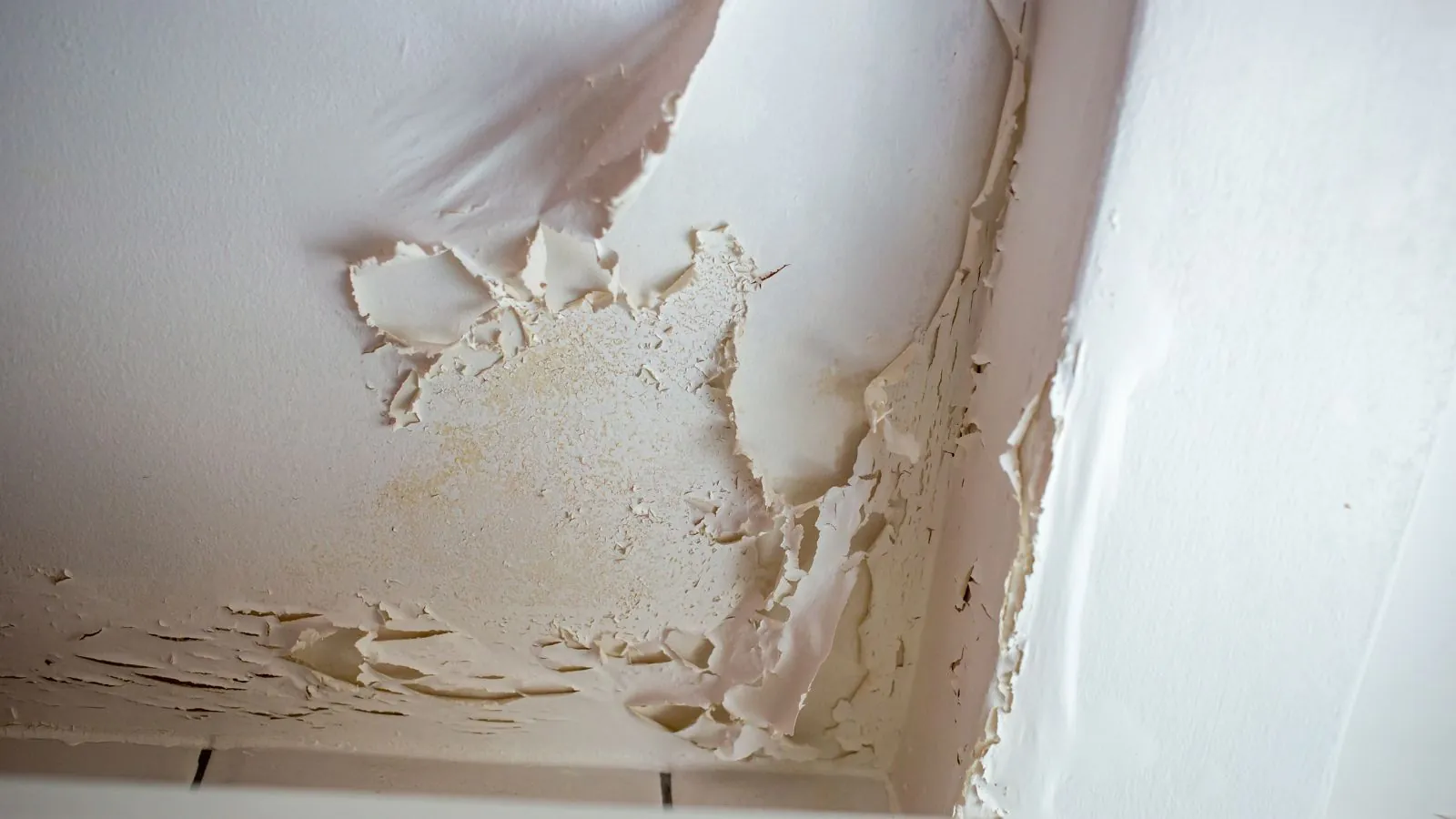
New water damage is wet, often soft and still changing. Old water damage is usually dry on the surface, with stains and sometimes odor. The difference changes the plan, because new damage can often be dried while old damage may already have damaged the material.
It also matters to claims. Insurers distinguish between sudden events and long-term seepage, and the visible signs help show which one happened.
A moisture meter is the only reliable way to tell whether a stain is still wet.
Signs of New and Old Damage
| Sign | Often new | Often old |
|---|---|---|
| Stain color. | Light, darker when wet. | Yellow or brown with ring edges. |
| Texture. | Soft, swollen, damp. | Dry, brittle or crumbly. |
| Paint. | Bubbling. | Peeling or flaking. |
| Odor. | Little or none. | Musty or earthy. |
| Edges. | Spreading. | Defined tide lines. |
| Growth. | None. | Possible dark spots. |
Clues That Damage May Be Ongoing
Rings within rings
Multiple tide lines suggest repeated wetting.
Stain returns after painting
A moisture source is still active.
Soft spots under dry paint
Material has been wet for a long time.
Rust at fasteners
Metal corrosion points to long-term moisture.
Water damage right now?
Call the 24/7 line. We explain scope and price before work starts.
What to Do With Each Type
For new damage, act fast. Stop the source, extract water and begin drying. Many materials can be saved.
For old damage, find the source first. Then decide whether affected materials are structurally sound. Soft drywall, rotted wood and growth-covered materials are usually removed rather than dried.
Highland Park Local Note
Highland Park has historic homes, including the Willits House on Sheridan Road, designed by Frank Lloyd Wright and listed on the National Register of Historic Places on November 24, 1980. Older buildings can carry decades of small leaks in hidden places.
That history is a reminder that stains in old houses are not always recent. A moisture reading separates a dry old stain from an active leak.
Source: National Register of Historic Places listing for the Willits House.
Insurance and Old Damage
Insurers treat these differently.
Illinois guidance says maintenance-related seepage is commonly excluded. A long-running leak may fall into that group.
See our pages on ceiling water damage repair and wall and drywall water damage repair.
Why Old Damage Can Still Matter
A dry brown stain is not always a problem, but it can hide one. Beneath it, framing may be soft, insulation may be matted and fasteners may be rusted. If the stain is from an old roof leak, the roof may still leak.
The way to know is to test. A moisture meter reads wetness. A probe or screwdriver can show soft wood. Thermal imaging can show damp insulation. Together they separate a historic stain from an active leak.
If you are buying a house, ask the inspector about stains. Ask for any repair records. A stain with no explanation is worth a closer look.
Repairing Old Damage the Right Way
Fix the source first. Then remove materials that are structurally damaged or contaminated. Dry what remains. Replace with new materials and finish.
Painting over a stain without these steps hides the problem. A stain-blocking primer can cover a dry, old stain, but it does not fix moisture.
Homes in Lake Forest and Winnetka often have decades of layered repairs. A clear record of what was done and when is valuable, so keep it.
An Example: A Brown Ring That Returned
A homeowner paints over a ceiling stain after a plumbing repair. Three months later the stain reappears and has grown. The painter says the primer failed. In reality, the leak had not fully stopped.
A moisture meter shows wet drywall and a damp joist. The plumber finds a weeping joint that was missed. After the joint is fixed and the ceiling is dried and replaced, the stain does not return.
A stain that comes back is a clue. Treat it as a measurement, not a cosmetic problem.
Questions to Ask About an Old Stain
Use these when you buy a house or find a mark you do not remember.
- When was the leak repaired and by whom?
- Is the area dry now by a meter reading?
- Is the material still firm or is it soft?
- Is there a smell of damp or mustiness?
- Were permits or invoices kept for the repair?
- Could the source still be active?
Why a Moisture Meter Beats Guessing
Touch, sight and smell are useful but not reliable. A cold, damp feeling may be condensation. A dry-looking stain may sit over a wet joist. A meter gives a number that can be compared over time.
Take readings in the stain and outside it. Mark the spots and take them again after a week. If numbers rise, the source is active. If they fall, the area is drying. This simple practice is how professionals track progress.
A thermal camera adds a picture. It shows cool, damp areas inside a wall without cutting it open. Used together with a meter, it helps decide where to open the wall and where to leave it alone.
What an Inspector Can and Cannot Tell You
A home inspector can spot stains and may use a moisture meter. An inspector generally cannot open walls or confirm the cause of an old stain. If a stain looks significant, ask for a specialist evaluation.
Review any seller disclosure, since it may mention past leaks and repairs. A stain that matches a disclosed and repaired leak is easier to understand than one with no explanation.
Standards and Sources
Our approach follows the general framework of ANSI/IICRC S500, the published standard for professional water damage restoration. The insurance notes on this page reflect guidance from the Illinois Department of Insurance.
Old and New Damage Questions in Highland Park
Can a stain in an older Highland Park home be harmless?
Yes, if the source was fixed long ago and the area is dry. A moisture reading confirms it.
Can I paint over an old stain?
Only after it is dry and the source is fixed. Use a stain-blocking primer.
How can I tell if a stain is still wet?
A moisture meter reads it. Touch alone is not reliable.
Does an old stain mean mold?
Not necessarily, but a musty smell is a reason to check.
When to Call for a Check
Call if a stain is growing, if you smell damp, or if paint bubbles. Do not wait for a ceiling to sag.
We also serve Lake Forest and Winnetka, where many homes have decades of history behind their walls.