
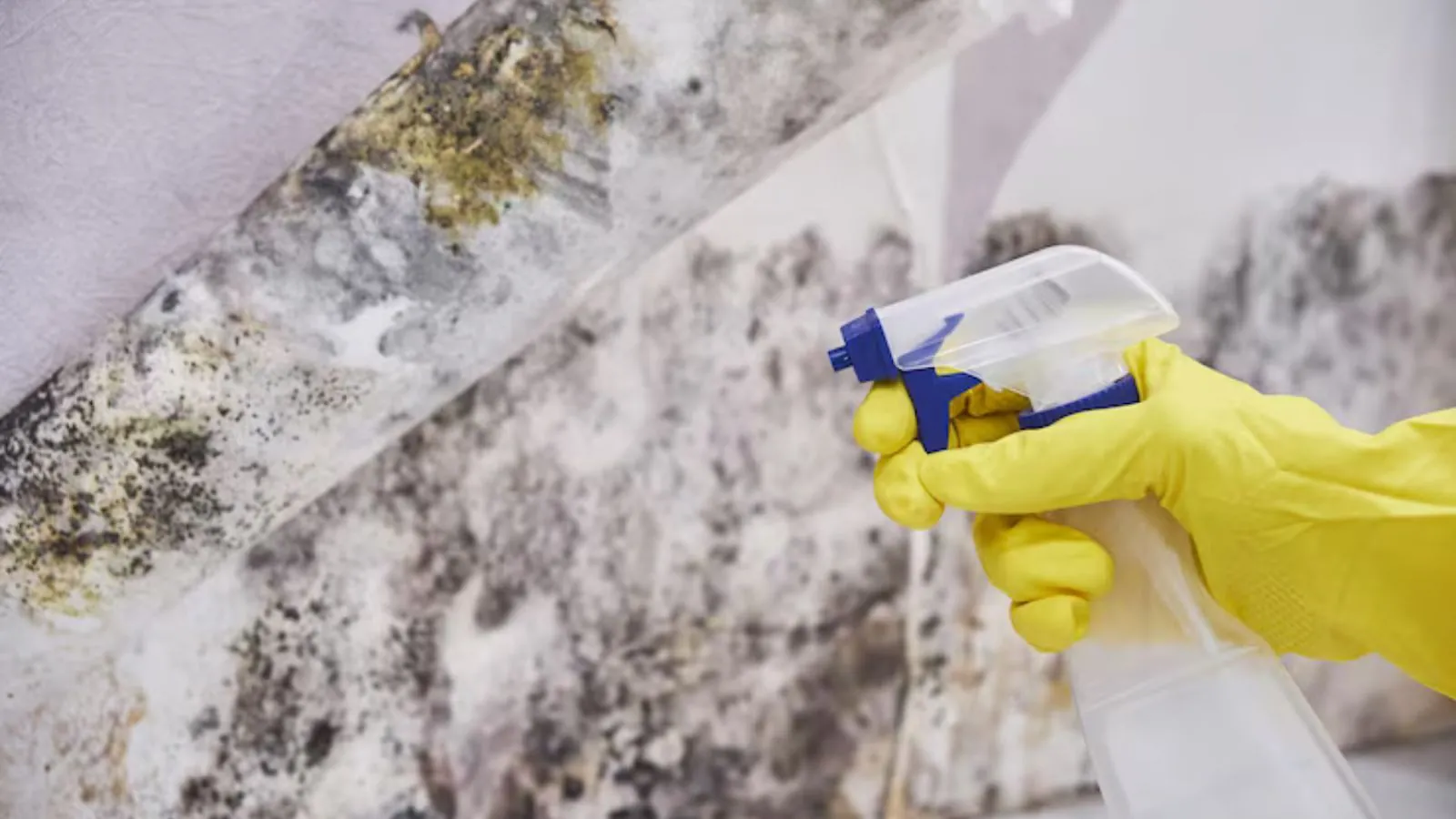
Why Basements Grow Mold
Mold needs moisture, a food source and time. A basement offers all three. Concrete walls can sweat, groundwater can seep through floor joints, and stored cardboard and wood framing give mold something to eat.
The most important step is fixing the moisture source. Cleaning a surface without fixing the leak or the humidity problem only buys time. Growth often returns within weeks.
We make no health claims on this site. If you have health concerns related to your home, talk with a medical professional.
A Sound Basement Mold Plan
Find the moisture source
Look for leaks, seepage, condensation and failed sump pumps. Fix the cause first.
Dry the space
Dehumidifiers and air movers lower moisture in materials and air.
Contain the work area
Plastic barriers and filtered air machines keep dust and spores from spreading.
Remove porous affected materials
Drywall, insulation and carpet with growth are removed and bagged.
Clean and verify
Surfaces are cleaned and moisture readings confirm the area is dry.
What to Clean and What to Remove
| Material | Typical choice | Why |
|---|---|---|
| Painted concrete or block. | Clean. | Non-porous. |
| Wood framing. | Clean and dry. | Solid wood can often be treated. |
| Drywall. | Remove. | Paper and gypsum are porous. |
| Carpet and pad. | Remove. | Hard to clean thoroughly. |
| Cardboard storage. | Discard. | Organic and absorbent. |
Water damage right now?
Call the 24/7 line. We explain scope and price before work starts.
Illinois Rules You Should Know About
Illinois passed the Mold Remediation Registration Act, Public Act 103-0893. According to the Illinois Department of Public Health, it requires third-party certification and registration with the department for those who perform mold remediation, effective January 2025.
Check the department's website for current details and the registration list before hiring anyone. We recommend asking any contractor how they meet the requirements.
Highland Park Local Note
Highland Park has ravines and bluffs, and parts of the city lie in floodplain along the Skokie River and the Middle Fork of the North Branch Chicago River. Basements in those areas can see more groundwater pressure after storms.
The Highland Park Water Plant draws Lake Michigan water through a 54 inch intake about a mile offshore. That is drinking water supply, not groundwater, so basement dampness is usually a drainage and humidity matter rather than a city supply issue.
Sources: City of Highland Park Engineering Division and Water Plant materials.
Prevention After the Cleanup
Keeping the basement dry is the real fix.
Keep humidity moderate, service the sump pump, extend downspouts away from the foundation and keep stored items off the floor.
If a leak started the problem, see our guides on basement water damage cleanup and mold remediation.
Controlling Humidity After the Cleanup
Once a basement is clean, the next job is keeping it dry. Aim for a steady, moderate indoor humidity level. A hygrometer is inexpensive and shows the number at a glance. If readings stay high, a dehumidifier sized for the space, with a drain line or pump, can run continuously.
Check that the dryer vent goes outdoors, that bathroom fans exhaust outside and that downspouts discharge well away from the foundation. These small details often explain why a basement stays damp.
If water enters through the floor-wall joint after storms, a drainage contractor can assess interior drains or exterior grading. That work is beyond mitigation, but it is the real fix when groundwater is the source.
When to Stop DIY and Call a Professional
A small patch of surface growth on a hard surface may be a cleaning job. Larger areas, growth inside walls, growth after sewage or flood water and growth that returns all call for a professional plan.
Disturbing a large area without containment can spread dust through the house. Do not sand, scrape or brush heavy growth. Do not run the furnace fan with the area open.
If you suspect hidden growth, a moisture check is the first step. See our page on mold remediation for what the process includes, and our blog post on mold clearance testing for what comes after.
A Basement Case: Damp Corner, Hidden Source
A homeowner notices a musty smell and a dark patch in one corner of a finished basement. A wet vacuum run and a fan seem to help for a week. Then the smell returns. A moisture check shows high readings in the lower drywall and a wet bottom plate.
The cause turns out to be a downspout that discharges near the foundation. Water seeps through the wall joint during storms. The fix has two parts. A contractor redirects the downspout and improves grading. A remediation crew removes the affected drywall, dries the framing and cleans what remains.
Without the first part, the second would not last. Moisture control comes first in every case.
Basement Moisture Checklist
Walk through these items once a season.
- Downspouts discharge several feet from the foundation.
- Soil slopes away from the house on all sides.
- The sump pit is clear and the pump runs when tested.
- Window wells are clean and drain freely.
- Humidity stays in a moderate range.
- Stored items sit on shelves instead of the floor.
Choosing Dehumidification That Fits a Basement
A basement dehumidifier must handle the space. Undersized units run constantly and cannot keep up. Look at the rated capacity and the area it covers. A unit with a built-in pump or a drain line saves emptying a bucket.
In cool basements, some compressor-based units lose efficiency. Desiccant units work better in cold conditions and are used during professional drying. For long-term humidity control, a unit suited to cool spaces is a good choice.
Place the unit away from walls so air can flow. Keep doors to the basement closed so the unit is not trying to dry the whole house. Empty or drain it regularly and clean the filter.
Safety Steps Before You Act
Keep these basics in mind while you decide what to do next.
- Do not disturb, brush or sand visible growth.
- Do not run fans across affected surfaces.
- Keep the area closed off where you can.
- Fix the moisture source before any cleaning.
- If you have health concerns, talk with a medical professional.
Standards and Sources
Our approach follows the general framework of ANSI/IICRC S520, the published standard for professional mold remediation, and the Illinois Mold Remediation Registration Act, Public Act 103-0893, as described by the Illinois Department of Public Health. The insurance notes on this page reflect guidance from the Illinois Department of Insurance.
Basement Mold Questions in Highland Park
Is basement mold common in Highland Park homes?
Moisture problems are common in older lower levels, especially after heavy rain. A moisture check tells whether you have an issue.
Can I paint over mold?
No. Paint hides growth and does not fix moisture.
Does a dehumidifier alone solve it?
It helps with humidity but does not remove affected porous materials.
Should I test before cleanup?
Testing is optional and usually done by a separate third-party assessor. Fix moisture first.