
Why There Is No Single Number
Drying time depends on the building as much as the water. A small clean-water spill on carpet may dry in a few days. A basement soaked with ground water, with wet framing and insulation, can take much longer.
Any contractor who promises an exact number before measuring is guessing. Readings tell you when materials reach normal moisture levels. That is the real finish line.
The industry standard, ANSI/IICRC S500, uses monitoring and drying goals rather than a fixed schedule.
Factors That Speed or Slow Drying
| Factor | Faster drying | Slower drying |
|---|---|---|
| Material. | Carpet, thin drywall. | Hardwood, plaster, framing. |
| Water category. | Clean water. | Contaminated, needing removal. |
| Humidity. | Dehumidified air. | Humid summer air. |
| Temperature. | Warm rooms. | Cold basements. |
| Response time. | Same day extraction. | Days of delay. |
| Airflow. | Air movers placed well. | Closed cavities and tight spaces. |
What Happens During Each Phase
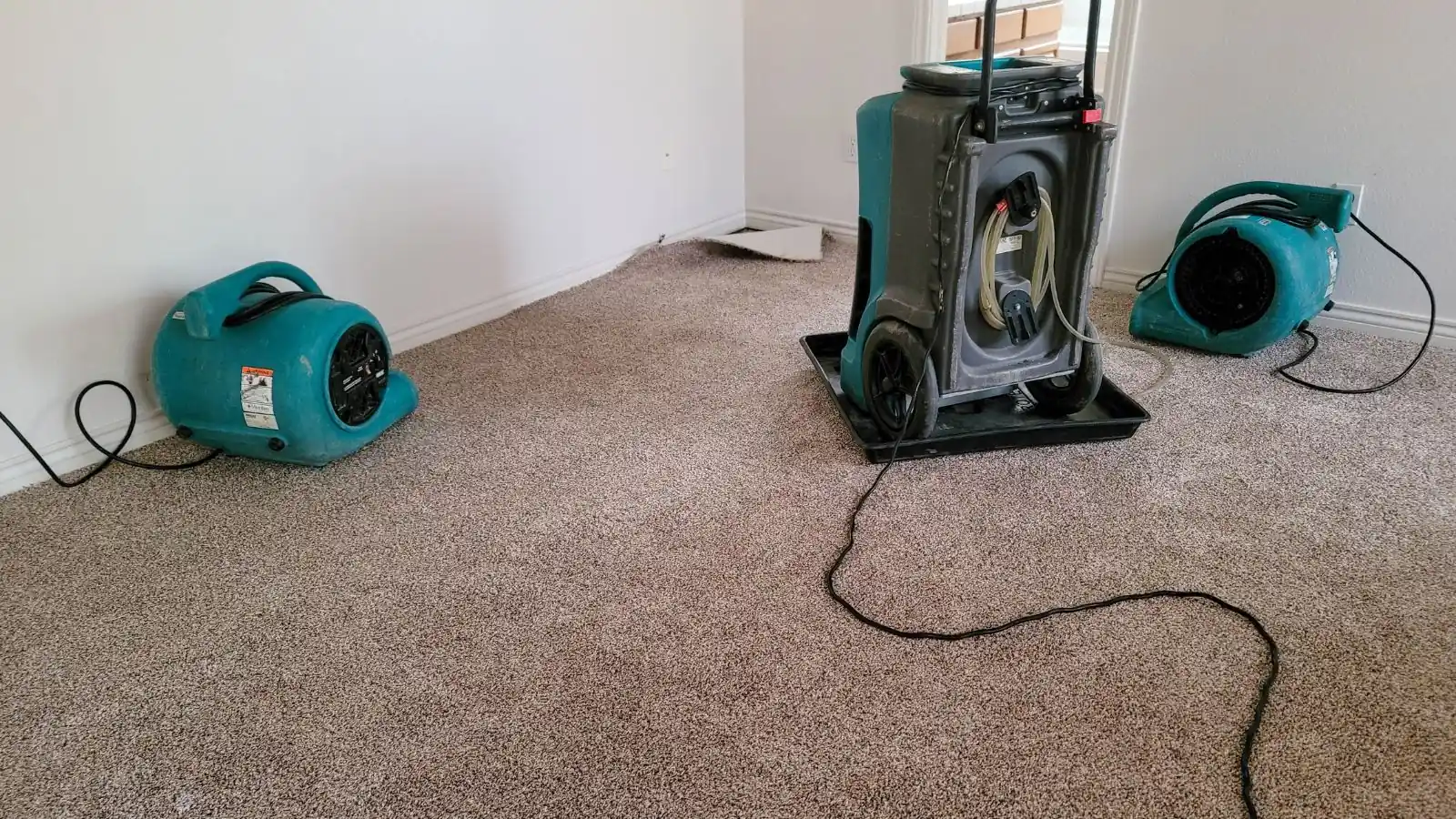
The first phase is extraction, which removes bulk water. After that, evaporation starts. Air movers speed it up and dehumidifiers pull moisture from the air. Daily readings show progress.
The later phase is slower. Dense materials release moisture gradually, so readings drop slowly and then level off. That is normal. Equipment stays until the last materials reach their targets.
Water damage right now?
Call the 24/7 line. We explain scope and price before work starts.
Signs That Drying Is Working
Falling readings
Moisture meter numbers drop from visit to visit.
Lower humidity
Room humidity trends down while dehumidifiers run.
Warm dry surfaces
Surfaces lose their cool, damp feel.
Odor fades
Musty smell gets weaker as materials dry.
Highland Park Local Note
Highland Park sits on Lake Michigan, so humid summers and cold winters both affect drying. In winter, a closed house is dry but cold, which slows evaporation unless heat is available. In summer, outdoor humidity can work against open windows.
That is why we keep windows closed and use dehumidifiers during drying.
Local conditions described in general terms. No regional statistics are quoted.
Do Not End Drying Early
Stopping early is a common mistake.
Switching off equipment because walls feel dry can leave hidden moisture. Readings should match dry targets before equipment comes out.
Read more in our pages on structural drying and dehumidification and hardwood floor water damage repair.
Typical Phases of a Drying Job
The first day is about extraction and setup. Standing water is removed, wet materials are taken out and equipment goes in. The next few days are the main drying phase, when readings fall quickly. After that, drying slows as dense materials release the last moisture.
The final phase is verification. The crew takes a full set of readings and compares them with targets. Equipment comes out only when the numbers match.
For a small clean-water loss in carpet and drywall, the main drying phase is often a matter of days. For a basement flood with framing and plaster involved, it can last longer. We do not promise a number, because the readings decide.
Seasonal Effects You Can Plan Around
Humid summer weather makes drying harder, because the air already holds a lot of water. A dehumidifier does the work that dry outside air would otherwise do. In winter, cold basements slow evaporation, and heat or desiccant dehumidifiers help.
Spring brings rain and high groundwater, so basements may be damp even without a leak. If you are drying a basement in spring, expect longer times and keep the sump system healthy.
Houses in Highwood and Lake Forest follow the same physics as Highland Park, though lot size, basement depth and construction vary. A moisture map for your house is more useful than any average.
Three Example Losses and Their Drying Patterns
A small clean-water spill on a carpeted bedroom may need only a few air movers and a dehumidifier. Readings often reach targets within a few days. The pad usually comes out and new pad goes in.
A kitchen leak that wets cabinets, flooring and the wall behind may take longer. Cabinet bases and subfloor release water slowly, and the crew may need to open the toe kick to reach the cavity.
A basement flood with wet framing, insulation and a concrete slab is the longest. Concrete releases water for a long time. These examples show why a single number is misleading and why readings are the only honest guide.
Questions to Ask During Drying
Good questions keep the job on track.
- What were the starting readings and what is the target?
- How many air movers and dehumidifiers are running?
- When is the next reading visit?
- What will change the timeline?
- Is anything staying wet because of a hidden source?
- What records will I receive at the end?
What to Do If Drying Seems Stuck
Sometimes readings stop falling. Common reasons include a source that is still active, humidity that is too high for the equipment to overcome, or a material that holds water deep inside. A crew will look for each cause in turn.
If a pipe is weeping behind a wall, drying will never finish until it is fixed. If the equipment is undersized, adding a dehumidifier may fix it. If a material is saturated, such as a thick plaster wall, patience and controlled drying are needed.
In some cases, removing a material is faster than drying it. A crew explains that tradeoff so you can decide. Honest communication matters more than a promised date.
Keeping Your Own Drying Notes
It helps to keep a short log of your own. Note the date and time the water started, when the crew arrived and when each reading visit took place. Write down any odors or new stains you notice.
If you plan to rebuild with a contractor, share these notes. They show the timeline clearly and help avoid confusion about when things happened.
Standards and Sources
Our approach follows the general framework of ANSI/IICRC S500, the published standard for professional water damage restoration. The insurance notes on this page reflect guidance from the Illinois Department of Insurance.
Drying Time Questions in Highland Park
Why is the equipment still running after several days?
Dense materials dry slowly. Readings decide when it stops.
Does drying time differ in a Highland Park basement?
Cool, damp basements often take longer, and desiccant dehumidifiers may help.
Can I open windows to dry faster?
Usually no. Humid outside air can slow drying.
How do I know it is done?
Ask for the final moisture readings compared with dry targets.
What You Can Do to Help the Process
Keep doors and windows closed in the drying area. Keep the equipment plugged in and avoid moving it. Move belongings out of the wet area so air can reach walls.
If you are in a neighboring town, the same drying principles apply in Lake Forest and Glenview. Our crews serve both.